Open 24 hours
Call any hour, any day — the phone is answered around the clock.
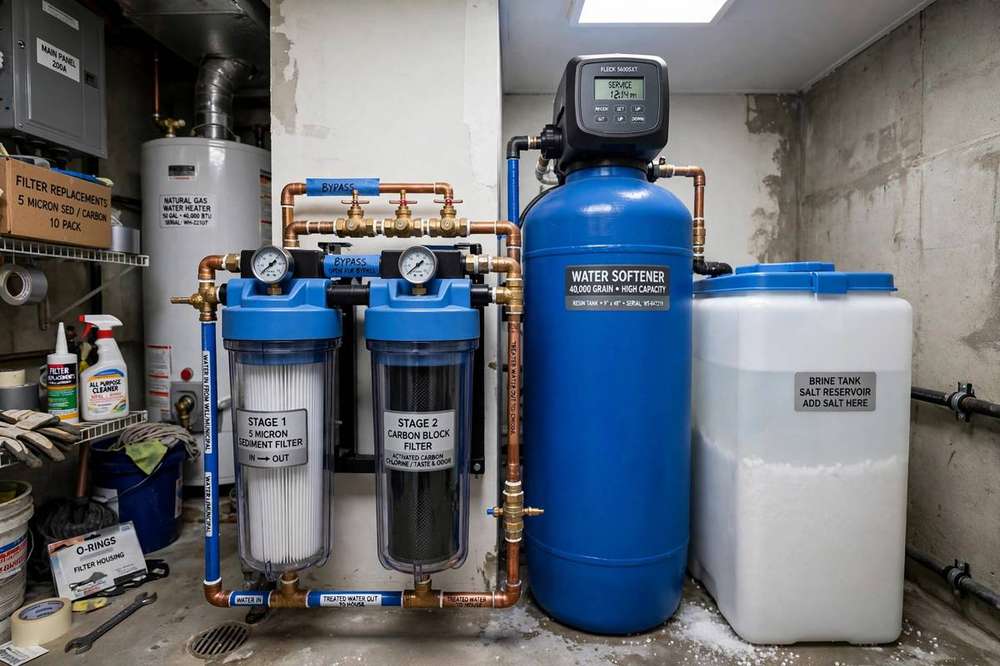
Water softener installation in Lakewood, CO is a preventive job: it takes hardness out of the water before scale builds up inside your water heater, your fixtures, and your appliances. Lakewood water is moderately hard — around 105 mg/L, about 6.1 grains per gallon — so scale accumulates over years, not weeks. That is the honest framing: this is not an emergency, and it is not a crisis. It is a decision about how long your heater and fixtures last.
Call any hour, any day — the phone is answered around the clock.
We explain what we found and what the options are before work starts.
Equipped vehicles and a clean job site when we leave.
A Lakewood business at 200 Union Blvd — neighbors serving neighbors.
A treatment system starts with a test, not a unit. Here is what the work covers.
A hardness test at your address, because softener sizing starts from your water, not a city average.
The unit is sized by actual hardness and household use — a unit sized from a city average is a unit sized wrong.
A softener on the main supply, so every fixture, the water heater, and the appliances get treated water.
Filtration for taste, chloramine, and sediment — a different job from softening, fitted where it is the actual need.
A drinking-water filter at the kitchen tap for households that want filtration without treating the whole house.
A bypass valve and accessible maintenance points, so the system can be serviced and the water can be bypassed when needed.
Call (720) 909-6690 — open 24 hours, every day — and tell us what is happening.
A water softener removes hardness — the calcium and magnesium that form scale — before the water reaches your heater, fixtures, and appliances.
The number to hold onto is 105 mg/L, about 6.1 grains per gallon: Denver Water's average hardness, soft to moderately hard. That is not extremely hard water, and anyone selling you a softener as an emergency is overselling it. What moderately hard water does is accumulate: scale builds slowly inside a tank water heater, narrows a tankless heat exchanger until flow drops, shortens faucet cartridges and shower valves, and spots glass and fixtures. Over years, it shortens appliance life and raises energy use — a scaled heater works harder for the same hot water. The decision is a long one, and the right first step is a test at your address, because hardness varies by provider and by street. Our tankless water heater installation page explains why scale matters most to a tankless unit, and our water heater repair page covers the heater that scale is quietly working on.
Softening and filtration are different jobs, and the page that conflates them is selling the wrong equipment. Softening removes hardness and scale. Filtration removes taste, chloramine, and sediment — and the filter media must match what is in the water: Denver Water uses chloramines, so a filter that only handles chlorine is the wrong filter for a Denver Water address, and other providers differ. A whole-house filter treats every tap; a point-of-use filter treats the kitchen tap only. The question is which problem you actually have — scale, taste, sediment, or some combination — and the answer starts with a test, not a unit. We do not publish the conflicting 12-15 grains-per-gallon figure that appears in some secondary sources; the measured average is around 6.1.
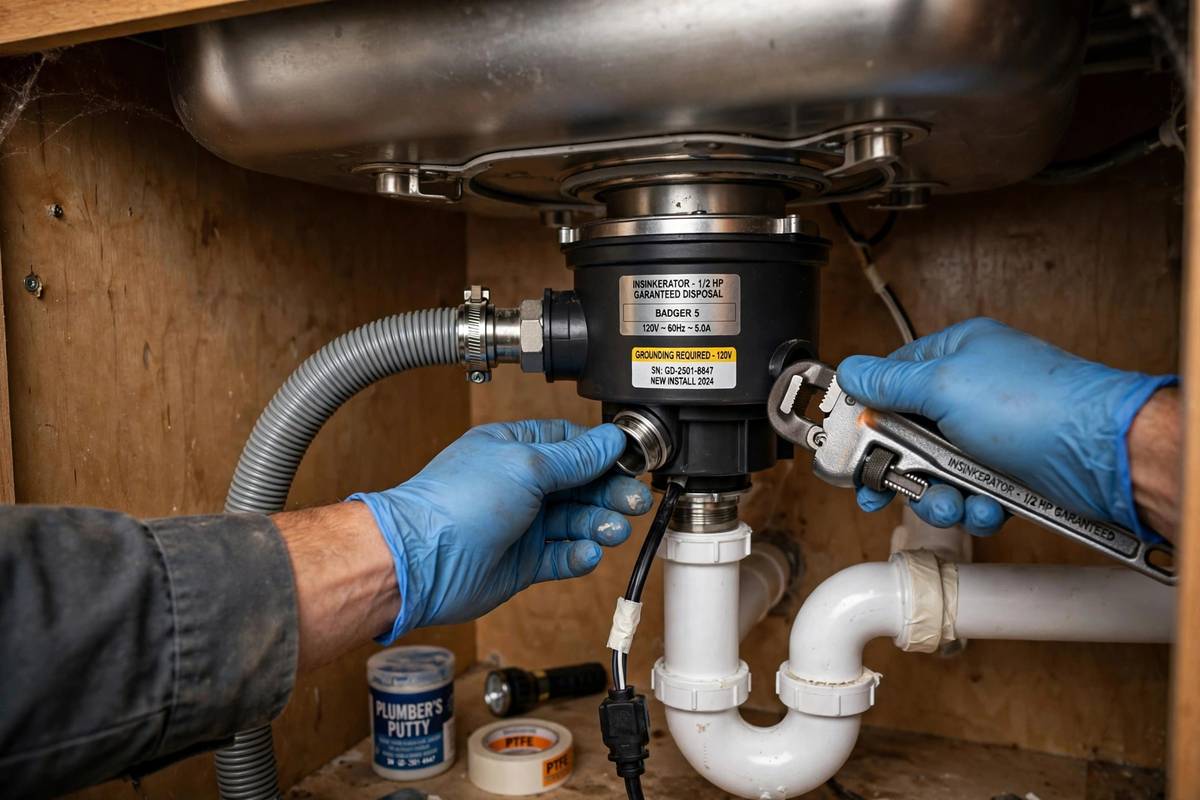
We test hardness at your address and check which provider serves you, because hardness and treatment needs vary by provider and street.
Scale, taste, sediment, or a combination — the test decides whether you need softening, filtration, or both, and whether whole-house or point-of-use fits.
The softener is sized by actual hardness and household use. A unit sized from a city average is a unit sized wrong.
The unit is fitted on the main supply with a bypass valve and accessible maintenance points, and the drain and overflow are routed properly.
Treated water is tested at the tap, the bypass and maintenance are shown to you, and the service schedule is set.
A test at your address — the basis for sizing, not a city average.
Which provider serves the address decides what is in the water and what media fits.
By actual hardness and household use, so the unit regenerates on schedule, not constantly.
Media matched to the water: chloramine-capable where the provider uses chloramines.
A bypass valve and a proper drain and overflow route, fitted as part of the install.
Treated water tested at the tap to confirm the system is doing what it was fitted to do.
Scale has been shortening heater life. A test shows moderately hard water, a softener is sized to the household, and the new heater starts life on treated water.
The spots and the sticking cartridges are the same problem: hardness. A whole-house softener treats every tap, and the fixtures stop scaling.
Taste is a filtration job, not a softening job. A point-of-use filter at the kitchen tap is fitted — a whole-house softener would have been the wrong equipment.
Lakewood's water story is fragmentation and moderation. There is no single provider — Denver Water serves about 60 percent of the city, and Consolidated Mutual, Bancroft-Clover, Green Mountain, Bear Creek, Alameda, Daniels, and a small City utility serve the rest — and hardness and treatment needs vary by provider and street. The water is moderately hard, not extremely hard, and the honest sales pitch is appliance life, not crisis.
Homes served by Green Mountain's district, where hardness and treatment needs are checked at the address.
Large lots where a whole-house softener protects a water heater, fixtures, and appliances together.
Older homes where spotted glass and sticking cartridges are the visible signs of scale.
1970s homes where a second failed water heater is often the moment softening is considered.
The oldest homes, where scale has had the longest to work on heaters and fixtures.
Around 105 mg/L, about 6.1 grains per gallon — scale builds over years, not weeks.
Hardness and chloramine use vary by provider — the test at your address decides.
A tankless heat exchanger narrows with scale fastest, so softening matters most to tankless owners.
Scale shortens heater, dishwasher, and washing-machine life — the preventive case for softening.
Before: a home replaces its second water heater in ten years, and scale is the common cause.
After: a softener sized to the household treats the water, and the new heater starts life without scale building inside it.
Maintenance: Service the softener on schedule. A softener that is not maintained stops softening, and the scale returns quietly.
Before: glass spots, stiff faucet handles, and shower valves that stick are the daily signs of hardness.
After: treated water reaches every tap, and the fixtures stop scaling.
Maintenance: The change is gradual — existing scale does not vanish, but no new scale forms.
Before: a homeowner expects a softener to fix the taste of the tap water.
After: a point-of-use filter is fitted at the kitchen tap, because taste is a filtration job and a softener would have been the wrong equipment.
Maintenance: The test decides the equipment. Softening and filtration answer different questions.
Hard water is a slow problem with slow answers. These are the problems treatment actually solves — and the ones it does not.
Scale builds inside tank and tankless heaters alike, shortening life and raising energy use. Softening removes the hardness that forms it.
Hardness leaves spots on glass and scale on fixtures. Treated water stops new scale from forming.
Scale builds inside faucet cartridges and shower valves until they drip or stick. Softening protects the new fixtures after they are fitted.
Taste is a filtration job: carbon media matched to the provider's disinfectant — chloramine-capable where Denver Water serves the address.
Sediment is a filtration job, and the filter is chosen for the particle the test finds — not a default.
Water treatment is the easiest work in plumbing to oversell, and the hardest to verify afterwards — the results take years. The discipline is the test first, and the honest framing throughout.
Emergency Plumber Lakewood holds a 5.0-star rating from 9 Google reviews. Homeowners across Lakewood call us when a main line fails, a water heater quits, or a drain will not clear — and the reviews describe the same things we aim for on every visit: a clear explanation of what is wrong, the options before work starts, and a clean job site when we leave. Call (720) 909-6690 — open 24 hours, every day — to talk through what is happening at your home.
Moderately hard. Denver Water's average hardness is around 105 mg/L, about 6.1 grains per gallon — soft to moderately hard. Scale accumulates over years, not weeks, so softening is a preventive decision about appliance life, not an emergency.
They solve different problems. A softener removes hardness and scale; a filter removes taste, chloramine, and sediment. A water test at your address decides which one you need — and whether you need both.
Yes — a tankless heat exchanger is the most scale-sensitive part of a home's plumbing, and softening keeps its flow up. Annual descaling is still needed, and our tankless installation page explains why.
Around 105 mg/L, about 6.1 grains per gallon, which is Denver Water's measured average. Some secondary sources claim 12-15 grains per gallon; we do not publish that figure. Hardness varies by provider and street, so a test at your address is the number that matters.
Not seeing your question? Call (720) 909-6690 — open 24 hours, every day — and talk it through with the local team.
Ask the local teamReach us any hour at (720) 909-6690. Tell us about your heater, your fixtures, and your water, and we will talk through testing first.