Open 24 hours, every day
Call (720) 909-6690 any hour — day or night.
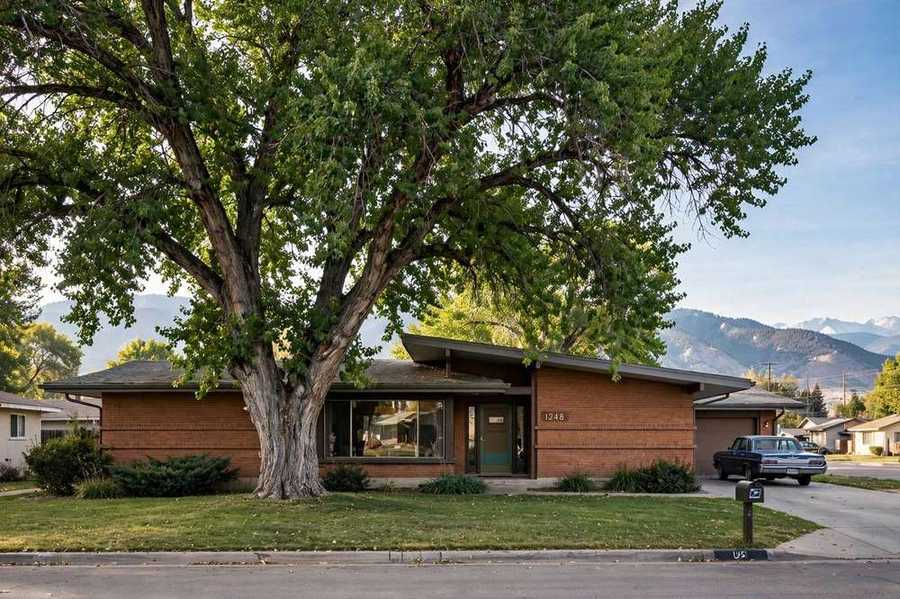
Plumbing in Applewood is the Orangeburg and galvanized test case. The 1959-67 brick ranches of Applewood Knolls combine galvanized supply corrosion with Orangeburg and clay lateral collapse, on long laterals under mature-tree lots. We are open 24 hours, every day, and you reach us by phone at (720) 909-6690.
Call (720) 909-6690 any hour — day or night.
We explain the approach before work starts.
Equipped vehicles and respectful cleanup.
Neighbors serving neighbors with follow-through.
Applewood is predominantly detached single-family housing: mid-century modern ranches, split-levels, and two-story brick homes on larger lots, some up to about half an acre, with the classic ranches running 2,200 to 3,500 square feet. The dominant era is the 1950s and 1960s, and the Applewood Knolls sub-area was built between 1959 and 1967. The median construction year is 1968 by one measure, and the sources disagree on the exact figure, so we publish the era rather than a single settled number. Homes of this era typically have galvanized steel supply lines, cast-iron drain stacks, and clay-tile or Orangeburg sewer laterals, and Applewood carries the highest Orangeburg-risk profile in this part of Lakewood. Add finished basements with wet bars, which listings routinely show in 1960s Applewood ranches, and a basement backup becomes the highest-consequence failure in the neighborhood.
Applewood is the Orangeburg and galvanized test case for north Lakewood: 1959-67 Knolls-era brick ranches on large lots, most of them built when the median construction year was 1968, combine corroded galvanized supply lines with clay or Orangeburg laterals that run long distances under mature trees. Finished basements with wet bars make a backup here a high-consequence failure. These nine services match that profile.
Homes of the 1950s-60s core typically have galvanized supply lines that have corroded from the inside over 60-plus years. Where pressure has dropped at every fixture, we assess the run and plan a repipe in sections the household can live with.
View service →02Clay or Orangeburg laterals under large, mature-tree lots fail at the joints and collapse with age, and roots make both worse. Replacement is a long run under trees, and the homeowner owns the lateral to the district main in most Lakewood districts.
View service →03A camera inspection is the first step on an Applewood lateral, because it shows root intrusion, offsets, and collapsed Orangeburg sections joint by joint. That picture decides whether the fix is a spot repair or a full replacement.
View service →04High-pressure jetting clears heavy buildup and root intrusion from a drain line, and on Applewood's long laterals it is often the step that restores flow before a replacement is planned. We jet the line and check flow at the fixtures that feed it.
View service →05A leak in a 1960s brick ranch can travel through walls and finished basement ceilings before it shows. We trace the water to its source with inspection equipment before opening anything, so the repair lands in the right place.
View service →06Slab leaks under finished basement floors are the quiet failure in Applewood ranches: warm spots, damp carpet, or a water bill that jumps with no change in use. We locate the leak and plan the repair around the finished space above it.
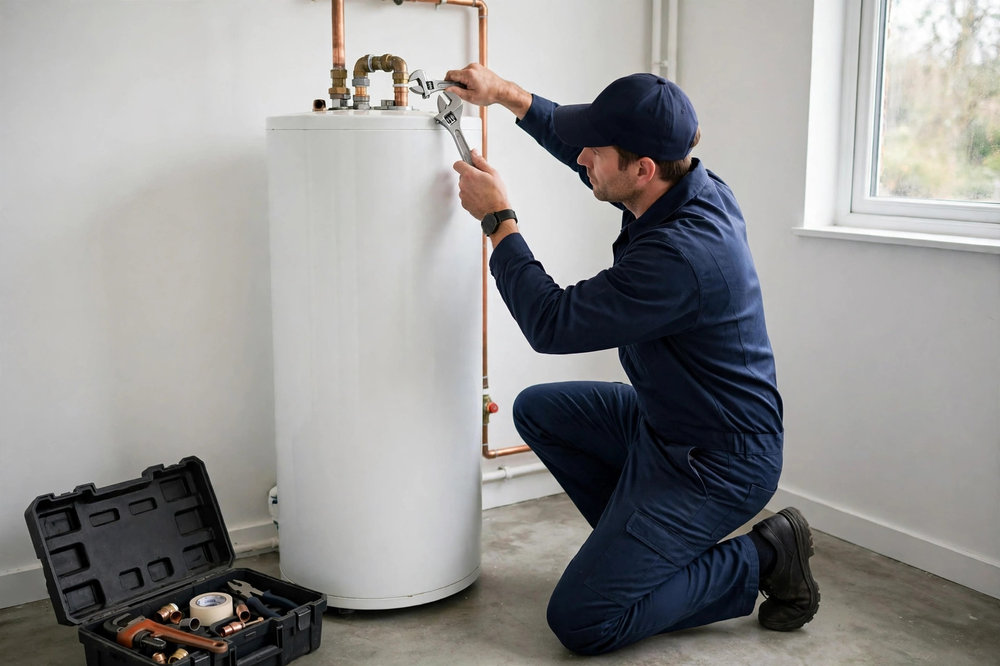
View service →07Water heaters in 1950s-60s homes are often past their expected life, and sediment builds up inside the tank. When a unit stops recovering or starts leaking, we replace it to code and confirm venting, supply, and relief discharge.
View service →08Heaters in 1950s-60s homes are often past their expected life, with sediment settled thick inside the tank. A unit that runs out of hot water too fast or starts to leak is replaced to code, venting, supply, and relief discharge included.
View service →09New faucets, toilets, and wet-bar fixtures in a finished basement need to fit 1960s rough-ins. Each fixture is fitted to the rough-in and tested under normal use before we leave.
View service →Applewood work starts underground. The lateral is camera-inspected before anyone talks about replacement, because a 1959-67 Knolls ranch can have clay or Orangeburg pipe under a mature-tree lot, and the failure is usually at the joints where roots get in. Supply lines are pressure-tested at several fixtures, because galvanized corrosion narrows the bore unevenly, and finished basements are protected before any work above them begins. Code here is the 2021 International Plumbing Code as adopted by Lakewood, Municipal Code Chapter 14.05, Ordinance O-2023-16, with the Colorado Plumbing Code underneath. Any fixture install, gas piping job, water-heater replacement, drain-waste-vent work, sewer replacement, water service line, or repipe needs a permit, and the fee is valuation-based, so the Lakewood Permit Counter at 303-987-7500 is where the dollar figure is confirmed.
Orangeburg and clay laterals from the 1950s-60s are at the end of life, and on large lots the run is long. Roots enter at the joints, the ground shifts in bentonite clay, and the pipe itself can collapse. A camera inspection comes first, and the replacement is planned around the full length of the run.
Galvanized supply lines corrode from the inside, so the bore narrows and pressure falls at every tap. We test pressure at several fixtures to tell a single bad run from a system-wide failure, then plan the repipe in stages the household can live with.
Finished basements with wet bars are common in 1960s Applewood ranches, and a backup or a slab leak there damages finished space, not just a utility room. We protect the finished areas before work starts and check the lowest fixtures first, because they back up first.
The 2021 IPC came into Lakewood through Municipal Code Chapter 14.05, Ordinance O-2023-16. Residential work here also follows the 2021 IRC, Chapters 25-33.
Permit fees follow valuation under Resolution R-2025-69, effective 1 January 2026, so there is no flat dollar figure to quote. Confirm the fee with the Lakewood Permit Counter, 303-987-7500.
Applewood's problems come from one combination: 1959-67 brick ranches on large lots with two classic failures at once, galvanized supply corrosion and Orangeburg or clay lateral collapse, with mature-tree roots compounding both. A finished basement underneath makes every failure more expensive.
Roots enter clay and Orangeburg laterals at the joints, and on long runs under mature trees there are many joints to enter. The line slows, then backs up, and a camera inspection shows whether the cause is roots, an offset joint, or a collapsed section.
Galvanized pipe corrodes from the inside over 60-plus years, narrowing the bore until pressure falls at every tap and brown water appears after the taps sit unused. We test pressure at several fixtures to find whether the problem is one run or the whole system.
A slab leak under a finished basement floor shows as a warm spot, damp carpet, or a water bill that jumps with no change in use. We locate the leak before opening the floor, so the repair is in the right place and the finished space above it is disturbed as little as possible.
Water heaters in 1950s-60s homes are often past their expected life. Sediment from moderately hard water builds up inside the tank, recovery slows, and the unit runs out of hot water faster than it used to.
Applewood is easy to navigate once you know the anchors. We use the golf course as the western reference point, the retail district as the eastern edge, and the main north-south street as the spine, with the park in the middle helping us split calls across the neighborhood.
The golf course anchors the western side of Applewood and gives us a clear reference for routing to homes on the surrounding streets.
Colorado Mills marks the eastern edge of our Applewood coverage and the retail district around it brings commercial restroom and tenant plumbing work.
Applewood Park sits centrally and helps us split calls across the neighborhood. It is a reliable midpoint reference when a customer gives a cross street.
Youngfield Street runs north-south through Applewood and is the main artery we use to reach most addresses in the neighborhood.
Applewood Knolls is the 1959-67 sub-area of brick ranches where the Orangeburg and galvanized profile is at its sharpest, on larger lots under mature trees.
Applewood is served by the north-Lakewood districts, including Consolidated Mutual Water and the Daniels and High View districts. The provider follows the address, so we confirm it per job.
We cover Applewood's brick ranches, split-levels, and two-story homes, from the larger lots near the golf course to the tighter streets toward the retail district. The nearby neighborhoods below are the other north-Lakewood areas we work in.
Two Creeks sits in the same north-Lakewood band as Applewood, with mature-tree lots and clay laterals of its own. Root intrusion and sewer backups are the recurring calls there.
Eiber has the deepest era stack in Lakewood, from the 1860s farm era through the 1920s streetcar suburb and the WWII surge, so lead, galvanized, Orangeburg, and copper all appear in sequence.
Daniels Gardens is the wartime workers' housing neighborhood, platted in 1939 for Denver Ordnance Plant workers, with 1940s galvanized and cast-iron pipework and duplex zoning.
North Alameda is another central Lakewood neighborhood with mid-century housing, and its laterals and supply lines fail in the same era patterns as Applewood's.
The jobs below are the kinds of calls that come up most often in Applewood. They follow the neighborhood's Knolls-era profile: long laterals under mature trees, galvanized supply lines, and finished basements that raise the stakes.
A long clay or Orangeburg lateral under a mature-tree lot fails at the joints, where roots get in. The usual approach is a camera inspection first, then a repair or replacement planned around the full length of the run.
A slab leak under a finished basement floor is located before the floor is opened, so the repair lands in the right place. The finished space above is protected while the work goes on, and the lowest fixtures are checked first.
A home where pressure has gone at every tap usually has galvanized supply lines corroded from the inside. We test pressure at several fixtures and assess whether the run or the whole system needs replacing.
Amazing company! These guys would put Mario and Luigi to shame. Very detail oriented and thorough with their jobs and surprisingly affordable. Also extremely quick with follow up and responding to messages and phone calls.
Arrived in less than an hour and completed the job in less than two hours for a very good price.
Emergency Plumber Lakewood came through for me when I had a problem with my water. They were easy to work with, explained everything, and got it fixed fast. I'd definitely call them again and recommend them to anyone who needs a plumber. 5 stars!
Applewood's year follows the mature-tree calendar as much as the weather. Spring is root season on the long laterals, summer is the window for lateral and repipe work, fall brings the first freeze to exposed lines, and winter tests the oldest galvanized pipework in the neighborhood.
Spring is when roots grow into clay and Orangeburg laterals at the joints, and when freeze damage on exterior lines shows up. A camera check on a slow drain in spring catches root intrusion before it becomes a backup.
Summer is the window for lateral replacement and repiping, when the ground is workable and a long trench under mature trees can be dug and restored. Finished basements stay dry while the outdoor work goes on.
Late October to mid-November usually brings the first hard freeze. Exposed lines, hose bibbs, and uninsulated runs in unheated spaces are the risk here.
Winter tests galvanized pipework that is already 60-plus years old. The February 2021 cold snap, when the 14th topped out at 1F and fell to -14F overnight, is the reminder of how cold it can get, and a frozen line in a finished basement is the worst place for it.
Applewood sits among other Lakewood neighborhoods with their own housing and pipework, and we work in all of them. If you are in one of these areas, the same team covers your street.
Applewood jobs are usually about what is underground: a lateral under mature trees, galvanized supply lines, or a slab leak under a finished basement. The questions below are written for that profile, and the answers should be specific to the house.
A camera inspection shows the lateral joint by joint, including root intrusion and collapsed Orangeburg sections. Anyone who quotes a sewer repair without one is guessing, and on a long lateral the guess can be expensive.
Galvanized lines are tested by checking pressure at several fixtures, not just one tap. Ask how the testing will show whether the problem is one run or the whole system.
Before work starts, ask for the scope in writing: fixtures, pipework, any permit, and cleanup. Check that it matches the house.
A permit is required for a water-heater replacement, a service-line job, a fixture install, gas piping, drain-waste-vent work, a sewer replacement, or a repipe. Ask whether this job needs one, and who will arrange it.
A backup or a slab leak in a finished basement damages finished space, not just a utility room. Ask how the finished areas will be protected while the work goes on.
Municipal Code Chapter 14.05, Ordinance O-2023-16, brought the 2021 IPC into Lakewood, and Applewood repipes, lateral replacements, and slab-leak work are built to it.
Beneath the city's adoption is the state code, 3 CCR 720-1, and behind that the State Plumbing Board's DORA licensing tiers.
Applewood permit jobs usually mean repiping, sewer replacement, water-heater replacement, or gas piping.
Fees are valuation-based under Resolution R-2025-69, effective 1 January 2026. Confirm the figure for the job with the Permit Counter, 303-987-7500.
Open around the clock, every day. Call (720) 909-6690 at any hour.
Our base is at 200 Union Blvd, Lakewood, CO 80228.
A 5.0-star rating from 9 Google reviews, every one of them 5-star.
Because the 1959-67 brick ranches of Applewood Knolls combine the two classic failures: galvanized supply corrosion and Orangeburg or clay lateral collapse, on long laterals under mature-tree lots. The median construction year is 1968 by one measure, and the sources disagree on the exact figure, so the era is the safe statement.
Have the lateral camera-inspected. A camera shows whether the problem is roots, a collapsed Orangeburg section, or a cracked clay joint, and the fix is different for each. A snake alone buys time rather than fixing the pipe.
Basements are common in Applewood, and listings routinely show finished basements with wet bars in 1960s ranches. That is why a basement backup is the highest-consequence failure here: the water reaches finished space before anyone notices.
Permits are required in Lakewood for water-heater replacement, water service lines, fixture installs, gas piping, drain-waste-vent work, sewer replacement, and repiping. Permit fees are valuation-based, so confirm the fee with the Lakewood Permit Counter at 303-987-7500.
Yes. We are open 24 hours, every day, and the phone number is (720) 909-6690. A burst pipe or a sewer backup is an emergency call at any hour.
Not seeing your question? Call (720) 909-6690 — we are open 24 hours, every day.
Ask the local teamCall (720) 909-6690 any hour. We are open 24 hours, every day, for Applewood's brick ranches and mature-tree lots alike.