A live person, any hour
When you call (720) 909-6690 at 2 a.m., you reach the local team, not a recording. We talk through what is happening and what to shut off first.
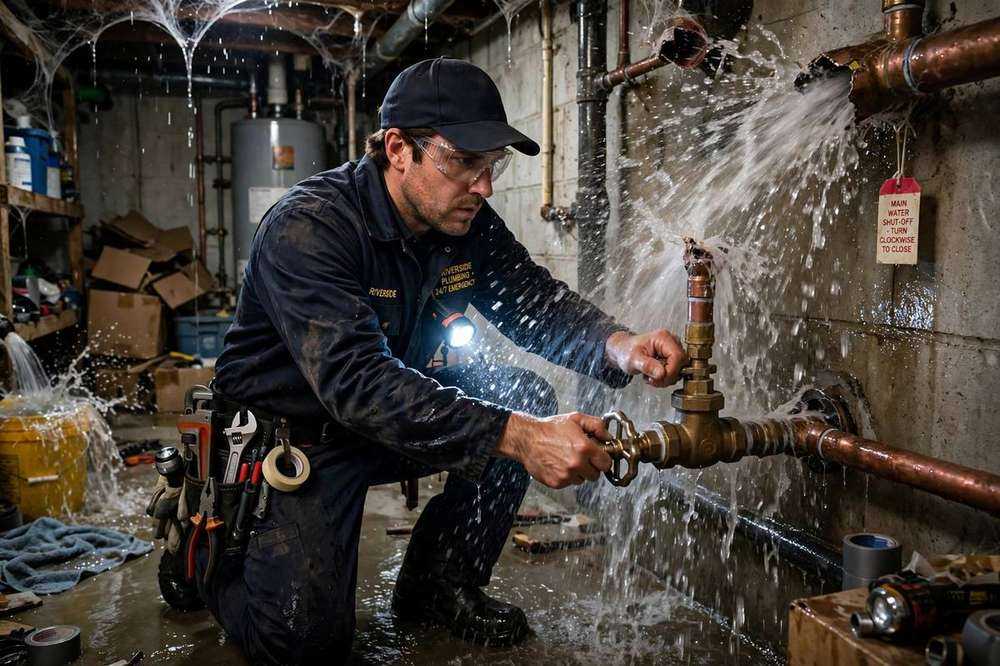
emergency plumber Lakewood CO — If water is running where it should not be, call (720) 909-6690. Emergency Plumber Lakewood is open 24 hours, every day, from 200 Union Blvd in Lakewood. A burst pipe, a sewer backup, a major leak, or no hot water in the middle of a winter night all get the same first step: stop the water, make the home safe, then fix the failed part.
When you call (720) 909-6690 at 2 a.m., you reach the local team, not a recording. We talk through what is happening and what to shut off first.
The first job on an emergency call is isolation: the main shutoff, the fixture valve, or the failed section, so the damage stops growing while the repair is planned.
You hear what failed, what the repair involves, and what comes next before any wall is opened or any pipe is cut.
We work in Lakewood’s neighborhoods every day, from Applewood to Green Mountain, and we stand behind the work we leave behind.
An emergency call covers finding the failure, stopping the water, and repairing the failed part. Here is what a visit includes.
We trace the failure to its source with pressure testing and, where the problem is hidden, a leak detection camera, and we explain what failed in plain language.
If the main will not close, we deal with that first. Isolating the failed section stops the damage and lets the repair happen dry.
The failed pipe, valve, or fitting is replaced with matching material — copper, PEX, PVC, or ABS — joined to the standard Lakewood follows, the 2021 International Plumbing Code.
Common fittings, supply lines, shutoff valves, and water heater parts travel with the crew, so most emergency repairs finish in one visit.
Old pipe and debris leave with us. We wipe down the work area and walk you through what was fixed and what to watch for next.
Water does not wait for business hours. Neither do we. Call any hour, any day, and talk to the Lakewood team.
Emergency plumbing in Lakewood is the work of stopping active water damage, restoring flow, and making a failed system safe again. It covers burst and frozen pipes, sewer backups, water heater failure, slab leaks, and shutoff valves that will not close. The crew arrives with an auger, a camera, and the fittings to isolate the problem, then repairs or bypasses the failed part so the home stops taking on water.
Lakewood’s calls cluster around a few predictable failures. Winter cold snaps split exposed copper in older crawlspaces, and root intrusion in clay laterals backs up basements in the older blocks of north Lakewood. In the summer the load shifts to sewer backups and irrigation line breaks. When you call, we triage by damage risk: active flooding first, a home with no water second, a slow drain last. That order keeps a small problem from becoming a drywall and flooring replacement.

You reach a person, not a menu. We ask what is leaking, where the water is going, and whether you can reach the main shutoff. If you cannot, we walk you to it over the phone.
Stopping the water is the first repair. We stay on the phone while you close the main or the fixture valve, so the damage stops before a truck rolls.
On site, we confirm the source — with a camera where the failure is hidden — then isolate the failed section. You hear what failed and what the repair involves before any work starts.
The failed section is replaced with matching material and the line is pressure-tested and run before we call it done. We do not leave a joint untested.
We haul out old pipe and debris, wipe down the work area, and walk you through what was fixed and what to watch. If a follow-up like a sewer camera inspection makes sense, we say so then.
Finds hidden leaks behind walls and under slabs without opening the whole area, so the repair stays targeted to the failed section.
Confirms root intrusion, cracks, and bellies in the sewer line before and after cleaning, so we know the line is actually clear.
Clears grease and roots that an auger cannot fully remove, restoring full flow in the line instead of just punching a hole through the clog.
Clears main-line and branch clogs, with the right head for the pipe size and the type of blockage.
Makes PEX connections on repairs, with each crimp checked before the line is pressurized.
Cuts and joins copper pipe cleanly, with the joint cleaned and fluxed so the solder pulls and the connection holds under pressure.
We isolate the repaired section and pressurize it before restoring water, which catches a weeping joint while the wall is still open.
For sewer and slab problems, the camera goes in before the tools come out. Seeing the failure on screen tells us whether a repair, a cleaning, or a replacement is the honest answer.
Lakewood has adopted the 2021 International Plumbing Code. Repairs are done to that standard, which matters at permit and resale time.
We match the repair to the existing system — copper to copper, PEX to PEX, PVC to PVC — so the joint behaves like the rest of the line.
We shut the main, cut out the split copper, and replace it with PEX rated for the exposure. The line is insulated and pressure-tested before we leave, and we check the other exposed runs for the same freeze risk.
We auger the line, camera it, and clear the root intrusion. If the camera shows a cracked section, we explain the targeted repair and schedule it before the line backs up again.
We shut the supply, drain the tank, and confirm the failure. If the tank itself has failed, a replacement is the answer — see our water heater replacement page for how that decision is made.
We shut the main, replace the failed valve and the supply line, and test both under pressure. We check the other shutoffs in the house while we are there.
Lakewood’s building stock splits the emergency calls in two. The older blocks of north and central Lakewood — Applewood, Eiber, Morse Park, Daniels Gardens — have galvanized and early copper lines that fail at joints and freeze in exposed crawlspaces when the temperature drops into the teens. The newer builds around Green Mountain and Two Creeks run PEX, which handles freezing better but fails at crimp fittings and manifolds. Winter is the busiest stretch: frozen pipes, burst supply lines, and water heaters working harder in cold garages. Summer shifts the load to sewer backups and irrigation line breaks. Lakewood’s median year built is 1977, and 56% of homes were built before 1980, so most emergency calls start in pipe that is fifty years old or more.
1950s–60s brick ranches with galvanized supply lines and clay or Orangeburg laterals — the highest-consequence combination when a basement backs up.
Post-war ranches with exposed crawlspace plumbing that freezes in a cold snap, so winter calls here are usually burst supply lines.
More PEX and newer mechanical systems, with failures clustering at manifolds and crimp fittings, and hillside lots that add drainage pressure.
Lakewood’s oldest surviving housing core, with 1930s homes whose laterals predate the city itself — camera-first diagnosis is standard here.
Copper and older supply lines split when temperatures drop into the teens, so winter calls skew toward burst pipe repair and insulation follow-up.
Root intrusion is common in older blocks, which is why we camera the line after clearing a backup instead of assuming the clog is gone.
Low water pressure and joint failures show up together, and a repair often reveals that a section replacement or a repipe is the better long-term call.
A January freeze split a copper supply line under the house. Water was pooling in the crawlspace and the kitchen had lost pressure. The homeowner could not get the old gate valve to close fully.
We replaced the gate valve, cut out the split copper, and ran new PEX with insulation on the exposed run. Pressure was restored and tested, and the crawlspace was dry before we left.
Maintenance: Keep crawlspace vents closed in hard freezes and insulate exposed runs. A foam sleeve is cheaper than a burst line at 2 a.m.
A Sunday backup sent gray water into the basement laundry room. The line had backed up twice in two years, and the previous fix was a quick auger with no camera.
We augered the line, then cameraed it and found root intrusion at a joint about 30 feet out. The roots were cut and the line jetted clear, with the joint flagged for a targeted repair.
Maintenance: Camera the line every couple of years on mature-tree lots, and avoid flushing wipes that catch on roots and start the clog.
The tank rusted through and leaked into the utility room on a cold night. The unit was old enough that a repair did not make sense.
We drained and removed the failed tank and installed a replacement, set the temperature, and tested the supply and relief valve. Hot water was back the same visit.
Maintenance: Flush the tank once a year and check the anode rod. A worn anode rod is what lets a tank rust from the inside.
Most plumbing emergencies are cheap to fix at hour one and expensive at hour twelve. These are the failures we get called for most in Lakewood, and what happens when they wait.
Water travels through drywall and flooring, and a slow response turns a pipe repair into a full room rebuild. We shut the line down, cut out the failed section, and replace it with copper or PEX to code. The repair is pressure-tested before we leave, and we check nearby exposed runs for the same freeze risk.
Gray water and sewage carry bacteria, and every hour of standing water adds to the cleanup and the health risk. We auger or hydro jet the line, then run a sewer camera to confirm the cause. Root intrusion gets cleared and the pipe checked for cracks so the backup does not repeat next month.
A rusted tank can dump 40 to 50 gallons before you notice, and the utility room floor and nearby framing take the hit. We shut the supply, drain the tank, and confirm whether it is a repairable part or a failed tank.
A slab leak runs under the foundation, so the water surfaces far from the source. Leak detection and pressure testing pinpoint the failed run. We repair the targeted section rather than breaking up the whole floor, then retest to confirm the line holds.
We have run emergency calls through every kind of Lakewood building stock, from 1940s ranches with galvanized lines to newer builds with PEX manifolds. That range means we have already seen your failure mode, and we know which repair holds and which one comes back.
Amazing company! These guys would put Mario and Luigi to shame. Very detail oriented and thorough with their jobs and surprisingly affordable. Also extremely quick with follow up and responding to messages and phone calls.
Emergency Plumber Lakewood came through for me when I had a problem with my water. They were easy to work with, explained everything, and got it fixed fast. I’d definitely call them again and recommend them to anyone who needs a plumber. 5 stars!
Awesome service
Active water where it should not be counts: a burst pipe, a sewer backup, a major leak, or a water heater leaking from the tank. No hot water in winter and a shutoff valve that will not close also qualify. A dripping faucet or a slow drain can wait for a scheduled visit. If you smell gas, that is different — leave the property and call 911 or Xcel Energy from outside first.
Shut off the main water supply if you can reach it safely, then open a cold tap at the lowest point in the house to drain the lines. Move rugs, electronics, and anything valuable out of the water’s path, and call (720) 909-6690. Do not touch electrical outlets or switches that are wet.
Yes. Emergency Plumber Lakewood is open 24 hours, every day, including nights, weekends, and holidays. When you call (720) 909-6690, you reach the local team — not a recording — and we talk through the shutoff first.
We serve all 23 residential neighborhoods in Lakewood, from Applewood and Eiber in the north to Green Mountain, Grant Ranch, and Bear Creek in the south, across ZIP codes 80214, 80215, 80226, 80227, and 80228.
Not seeing your question? Call the local team at (720) 909-6690 and describe what is happening — we will tell you honestly whether it needs a crew now.
Ask the local teamReach us any hour at (720) 909-6690. A real person answers, day or night. Call and describe what is happening — we will talk through the shutoff first, then the repair.