You see the footage
We show you what the camera sees on screen — cracks, roots, bellies, Orangeburg — and explain what each one means.
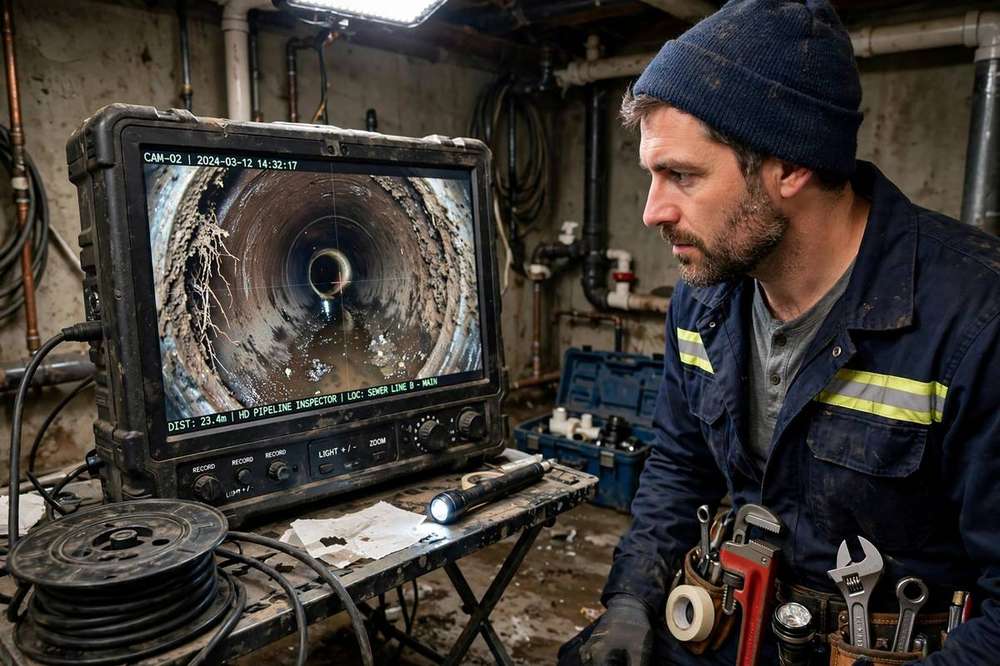
sewer camera inspection Lakewood CO — A sewer line you cannot see is a sewer line you cannot judge. Sewer camera inspection in Lakewood, CO, puts a camera down the lateral and shows you what is actually there — cracks, roots, bellies, or Orangeburg — before you buy a home or pay for a repair. Call (720) 909-6690. We are open 24 hours, every day, from 200 Union Blvd in Lakewood.
We show you what the camera sees on screen — cracks, roots, bellies, Orangeburg — and explain what each one means.
A scope before buying a home or before paying for a sewer repair turns a guess into a fact.
You hear what the inspection covers, what the footage can and cannot show, and what happens next before any work starts.
We work in Lakewood’s neighborhoods every day, from Applewood to Green Mountain, and we stand behind the work we leave behind.
A camera inspection covers the lateral from the house to the district main — and the plain-language reading of what the footage means.
The camera travels the lateral from the cleanout to the main, recording the whole run so nothing is guessed at.
We identify and locate every defect the camera finds: cracks, root intrusion, bellies where water sits, and separated joints.
We identify the pipe material on camera — clay, Orangeburg, cast iron, or PVC — because the material decides the fix.
Buying a 1950s–70s Lakewood home without scoping the sewer is buying a lateral you have never seen. We scope it and explain the footage.
After a drain clearing or jetting, the camera confirms the line is actually clear and shows what the blockage was hiding.
A sewer line you have never seen is a risk you have never measured. Call any hour and talk to the Lakewood team.
Sewer camera inspection in Lakewood is the diagnostic gate for every sewer job — and the pre-purchase check for every older home. Lakewood’s median year built is 1977, and 56% of homes were built before 1980. Homes of the 1940s–50s era typically have clay-tile laterals; 1960s–70s homes typically have clay, cast iron, or Orangeburg. Those laterals are now 50 to 80 years old, and everything that fails in them — cracks, root intrusion, bellies, separated joints, collapsed Orangeburg — is invisible from the surface. A line that clears with a cable but backs up again in six weeks is not a clog. It is structural, and only the camera proves it.
The camera is the diagnosis. It is not the repair. What the footage shows decides which repair page it belongs to: sewer line repair for a failed section, sewer line replacement for a collapsed or long-bellied line, and trenchless sewer repair where lining or pipe bursting fits. Every sewer page on this site links back here as step one, because a repair quoted without a scope is a guess — and a guess that involves digging is an expensive one.
A repeated backup, a home purchase, or a repair quote — each shapes where the camera goes first and what we look for.
We find the main cleanout — usually in the basement, garage, or outside wall — and run the camera from there.
The camera travels the lateral to the main, recording the whole run. You watch the footage with us on screen.
We explain every defect the camera finds — what it is, where it is, and what it means for the line.
You get a clear answer: the line is sound, it needs a targeted repair, or it needs replacement — and which page that answer lives on.
A waterproof camera on a flexible line, with a locator that marks exactly where each defect sits underground.
Finds the lateral’s path and depth from the surface, so a defect the camera finds can be located for repair.
Clears the line before the scope when a blockage is hiding the pipe, so the camera sees the pipe, not the clog.
Clears the line so the camera can travel the full run from the house to the main.
The scope is recorded so you can keep the footage, share it with a buyer or seller, and compare it against a later scope.
We measure where each defect sits from the cleanout, so a repair starts in the right place.
We identify the pipe material on camera — clay, Orangeburg, cast iron, or PVC — because the material decides the fix.
Lakewood has adopted the 2021 International Plumbing Code. Any repair the footage points to is done to that standard.
After a drain clearing or jetting, the camera confirms the line is actually clear and shows what the blockage was hiding.
We explain the footage in plain language — what is a defect, what is normal wear, and what needs action now versus later.
The home looks solid, but the lateral is 60 years old. The scope shows root intrusion at a clay joint — a negotiating fact before closing, not a surprise after it.
The auger clears it each time, but it returns. The camera shows a belly holding water — a structural problem, not a clog.
Another company quoted a full replacement. The scope shows a single cracked section, and a targeted repair is the honest answer.
The line was jetted clear, but nobody scoped it. The camera shows the roots are gone — and a separated joint that needs a repair before the next backup.
A sewer scope is the diagnostic gate for every sewer job in Lakewood, and the pre-purchase check for every older home. The camera runs from the cleanout to the main and records the whole lateral — cracks, offset joints, root intrusion, bellies, and collapsed sections — so the scope is based on evidence, not on a guess from the surface. What the camera finds decides everything after it: a single bad joint is a repair, damage along the whole run is a replacement, and a line that only needs cleaning gets cleaned. The neighborhoods below are where a scope changes the answer most.
The 1889 Lakewood Subdivision, the oldest street grid in the city, built without curb, gutter, or sidewalk. Access and long laterals make the scope the first step, not an afterthought.
Horse lots beside multifamily on the same block. A long horse-lot lateral and an apartment building's shared drain are two different scopes on one street.
Manufactured-home communities beside 1950s brick ranches. Park-owned versus homeowner-owned lines must be verified per park before any scope is planned.
Lakewood's oldest surviving housing core, with laterals that predate the city itself. The 1920s–30s core makes a pre-purchase scope standard here.
The scope starts at the cleanout. If the cleanout is buried, damaged, or missing, finding access is the first part of the job.
Cracks, offset joints, roots, bellies, and collapsed sections — marked with depth and material, so the scope is a record, not an opinion.
The camera head is located from the surface, so the depth and path of the line are known before any digging is planned.
A scope before purchase shows the lateral a seller's disclosure cannot. In the 1940s–70s stock, it is the cheapest inspection on the deal.
Roots enter through hairline cracks; a cable cuts them, but only the camera shows whether the joint itself has failed.
A buyer was days from closing on a 1960s ranch. The home looked solid, but nobody had ever seen the sewer.
The scope showed root intrusion at a clay joint and a belly just past it. The buyer went back to the table with facts instead of closing on a lateral that would have backed up within the year.
Maintenance: Scope the sewer before you buy a 1950s–70s Lakewood home. It is the cheapest inspection in the transaction.
The basement backed up three times in two months, and each clearing fixed it for a few weeks. The household was paying for the same clearing over and over.
The camera showed a belly holding water — a structural problem, not a clog. The household stopped paying for clearings and got a repair plan instead.
Maintenance: A line that clears with a cable but backs up again in weeks is not a clog. It is structural, and only the camera proves it.
Another company quoted a full lateral replacement. The household wanted a second opinion before committing.
The scope showed a single cracked section, with the rest of the line sound. A targeted repair was the honest answer, and the household saved the cost of a replacement they did not need.
Maintenance: A repair quoted without a scope is a guess. Ask to see the footage before you agree to digging.
Every sewer problem below is invisible from the surface. The camera is the only way to tell them apart — and the fix for each one is different.
Roots find clay joints and grow into the line. The camera shows the joint, not just the roots, so the repair fixes the cause.
A belly holds water instead of flowing. The camera shows the standing water and the length of the sag.
Bentonite clay pulls joints apart. The camera shows the gap and whether the pipe has shifted.
Orangeburg softens and collapses with age. The camera shows it going oval before it fails — and a repair is usually a stopgap.
We have scoped laterals through every kind of Lakewood building stock, from 1930s homes with clay lines to newer builds with PVC. That range means we can read the footage — and tell you what is a defect, what is normal wear, and what needs action now.
Amazing job very impressed
Emergency Plumber Lakewood came through for me when I had a problem with my water. They were easy to work with, explained everything, and got it fixed fast. I’d definitely call them again and recommend them to anyone who needs a plumber. 5 stars!
great service
It shows the inside of the lateral from the house to the main: cracks, root intrusion, bellies where water sits, separated joints, cast-iron scale, and Orangeburg pipe going soft and oval. We record the footage and explain each defect on screen — what it is, where it is, and what it means.
Yes, especially for a 1950s–70s home. Lakewood’s median year built is 1977, and laterals from those decades are 50 to 80 years old. A scope is the cheapest inspection in the transaction, and it turns a lateral you have never seen into a fact you can negotiate on.
You get a clear answer: the line is sound, it needs a targeted repair, or it needs replacement. We explain which one and why, and point you to the right page — sewer line repair for a failed section, sewer line replacement for a collapsed or long-bellied line, or trenchless sewer repair where lining or pipe bursting fits.
Yes. That is the point of the scope. A failed section gets a repair; a collapsed, long-bellied, or Orangeburg line gets a replacement conversation. The footage draws the line between the two, and we show it to you before any work is quoted.
Not seeing your question? Call the local team at (720) 909-6690 and describe what is happening — we will tell you honestly whether it needs a crew now.
Ask the local teamReach us any hour at (720) 909-6690. A real person answers, day or night. Tell us whether it is a home purchase, a repeated backup, or a repair quote you want checked.