Diagnosis before parts
We test the thermostat, heating element or burner, and tank condition before recommending any part — a dead element and a dead tank are very different jobs.
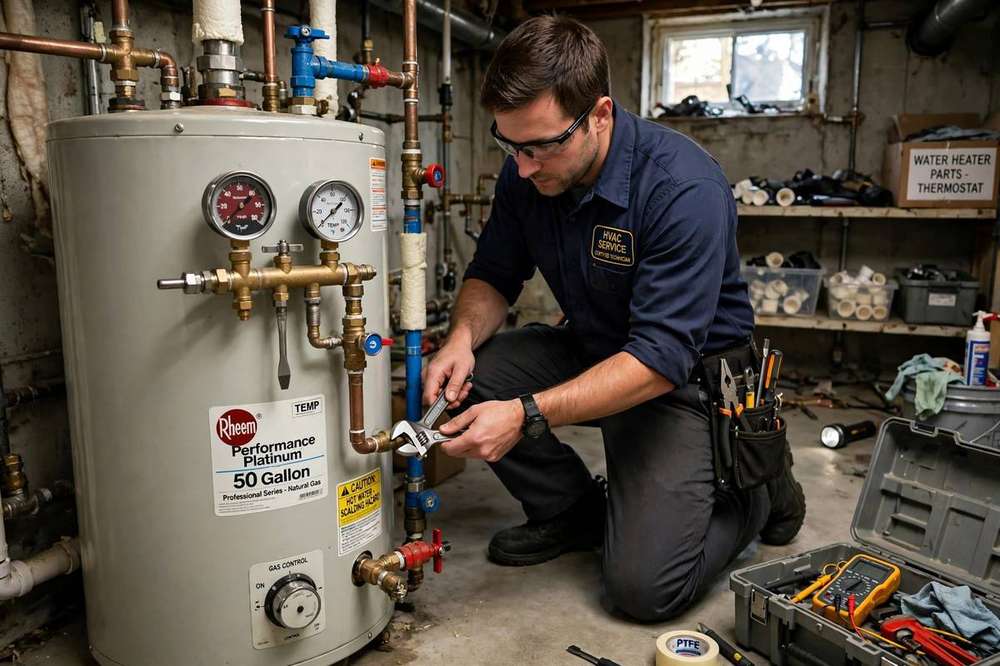
water heater repair Lakewood CO — No hot water, a rumbling tank, or water pooling around the base — water heater repair in Lakewood, CO, starts with finding out whether the unit can be fixed or whether it is done. Call (720) 909-6690. We are open 24 hours, every day, from 200 Union Blvd in Lakewood, and we will tell you honestly when a repair is the right call and when it is not.
We test the thermostat, heating element or burner, and tank condition before recommending any part — a dead element and a dead tank are very different jobs.
A leaking tank cannot be repaired, and an undersized unit cannot be fixed by a new part. We say so plainly and show you the <a href="water-heater-replacement">replacement</a> option.
You hear what failed, what the repair involves, and what comes next before any work starts.
We work in Lakewood’s neighborhoods every day, from Applewood to Green Mountain, and we stand behind the work we leave behind.
Water heater repair covers the parts that fail and the checks that tell you whether the tank itself is still sound.
Thermostat, heating element, burner, pilot, and gas supply are tested in order, so the failed part is found instead of guessed at.
Water at the base can come from a fitting, the relief valve, or the tank itself. We trace the source — a leaking tank means replacement, not repair.
Rumbling and popping usually mean sediment baked onto the bottom of the tank. We flush the tank and check the anode rod.
Lakewood’s water leaves scale in the tank. A yearly flush and an anode rod check are the two maintenance jobs that keep a tank alive.
At Lakewood’s elevation, a gas unit loses about 4% of its input for every 1,000 feet above 2,000 feet. Many “broken” units were never sized for Lakewood — we check that before promising a repair will fix it.
No hot water in a Lakewood winter is not a next-week problem. Call any hour and talk to the local team.
Water heater repair in Lakewood is a genuinely local decision, because two Lakewood facts work against every tank: altitude and hard water. At about 5,518 feet, a gas water heater loses roughly 4% of its rated input for every 1,000 feet above 2,000 feet — a nominal 40,000 BTU unit realistically delivers closer to 34,000 BTU. And Denver Water, which serves about 60% of Lakewood, averages about 105 mg/L of hardness, about 6.1 grains per gallon, which leaves scale in the tank year after year. A unit that was marginal at sea level is undersized here, and a tank that was never flushed is full of sediment.
That is why the repair visit starts with a sizing and condition check, not a part swap. If the tank is sound and the failed part is a thermostat, element, or burner component, a repair is the right call. If the tank itself is leaking, rusted through, or past its useful life — most tanks in Lakewood conditions last about 8 to 12 years — the honest answer is water heater replacement. A replacement in Lakewood needs a permit, and permit fees are valuation-based, so confirm the fee with the Lakewood Permit Counter at 303-987-7500.
No hot water, lukewarm water, noise, a leak, or a smell — each points to a different part. We ask what changed and when.
We test the thermostat, element or burner, gas supply, and relief valve in order, and check the tank for rust and leaks.
If the tank is sound, we repair the failed part. If the tank is leaking or past its useful life, we explain the replacement option instead of selling a repair that will not hold.
A repair visit is the right time to flush sediment and check the anode rod — the two jobs that decide how long the tank lasts next.
We restore hot water, test the temperature and the relief valve, and walk you through what failed and what to watch for.
Tests heating elements and thermostats so the failed part is found, not guessed at.
Checks burner operation and gas supply on gas units before any part is replaced.
Flushes sediment out of the tank, which restores capacity and stops the rumbling.
Shows whether the rod that protects the tank from rust is worn out — the most common reason a tank fails early.
Confirms the relief valve opens at the right pressure and the supply pressure is in range.
Traces water at the base to its source: fitting, relief valve, or tank shell.
Compares the unit’s rated input against what Lakewood’s elevation actually leaves — about 4% less per 1,000 feet above 2,000 feet.
Lakewood has adopted the 2021 International Plumbing Code. Water heater work is done to that standard, and replacements are permitted.
Water heater replacement in Lakewood needs a permit, with fees based on the valuation of the work. We confirm the fee with the Permit Counter at 303-987-7500.
We match any repair to the existing system — gas or electric, copper or PEX supply — so the repair behaves like the rest of the installation.
The lower element has failed and the tank is only heating the top half. We test the elements, replace the failed one, and flush the sediment while we are there.
Years of sediment have baked onto the tank bottom. We flush the tank, check the anode rod, and the rumbling stops.
We trace the leak to a failed relief valve — a repair. If it had been the tank shell, the answer would have been replacement, and we would have said so.
The unit is undersized for the household at Lakewood’s altitude. A repair cannot fix sizing, so we explain the replacement and tankless options honestly.
A water heater repair starts at the tank, not at the phone. The first question is whether the tank itself is sound: a leaking shell or rust-through ends the conversation, while a failed thermostat, element, dip tube, or relief valve on a sound tank is a part, not a replacement. Failures split by season — January and February, when inlet water is coldest and the unit works hardest — and by house: garage and crawlspace tanks in the postwar stock freeze and recover slowly, while 1980s condo closet units fail on connections and controls. The repair is diagnosed part by part, and the honest answer is sometimes that the part is not worth replacing.
1980s condos and townhomes with compact closet units and shared risers. Heater connections sit in the polybutylene window, so the fittings get checked with the unit.
2008-and-later PEX and copper homes where the tank is young. Repair here is a part — a thermostat, an element, a relief valve — not an aging tank.
2004-and-later condos above retail, with compact closet mechanicals and HOA common lines. Access and shut-offs are shared, so the diagnosis starts with the building.
1980s–90s planned-community tract tanks — sources disagree on the median build year, so the era range is the published figure. Element and valve failures lead, and the HOA and jurisdiction are checked before work is booked.
High-water-table pocket near the lake, where damp basements and mechanical rooms corrode fittings faster. A tank that looks fine can fail at the connections.
The two parts that fail most on an electric tank. A cold tank with power is usually one of these, and both are replaceable without touching the shell.
The rod sacrifices itself so the tank does not rust. When it is gone, rusty hot water follows — and by then the tank is usually past saving.
A failed dip tube sends cold water straight to the top of the tank. Lukewarm water that never recovers is often this part, not the burner.
February inlet water is far colder than summer water, so a tank that copes in July can fail in February. The repair is judged against the coldest month, not the mildest.
The household woke to cold showers on a January morning. The tank was heating only the top half, and the water ran lukewarm within minutes.
We tested both elements, found the lower one failed, replaced it, and flushed the sediment. Hot water was back the same visit, with the anode rod checked while we were there.
Maintenance: Flush the tank once a year. Sediment is what kills elements and shortens tank life in Lakewood’s hard water.
The tank rumbled and popped every time it fired, loud enough to hear from the next room. Sediment had baked onto the bottom over years without a flush.
We flushed the tank thoroughly and replaced the worn anode rod. The rumbling stopped, and the tank recovered hot water noticeably sooner.
Maintenance: A yearly flush and an anode rod check are the two maintenance jobs that keep a tank alive.
Water was pooling at the base of the tank, and the household assumed the tank had failed. The tank itself was sound.
We traced the leak to the relief valve, replaced it, and tested the supply pressure. The tank stayed, the leak stopped, and the household avoided a replacement they did not need.
Maintenance: If water appears at the base, do not assume the tank is done — but do not ignore it either. A leaking tank shell is the one failure that always means replacement.
Most water heater problems are cheap to fix when they first show up and expensive once the tank fails. These are the failures we get called for most.
A failed element, thermostat, burner, or pilot leaves the house cold. We test in order and replace the failed part.
Sediment baked onto the tank bottom makes the burner boil trapped water. A flush and an anode rod check come first.
Water at the base can come from a fitting, the relief valve, or the tank shell. We trace the source — a leaking shell means replacement.
A unit sized for sea level delivers about 4% less per 1,000 feet above 2,000 feet. We check the sizing before promising a repair will fix lukewarm water.
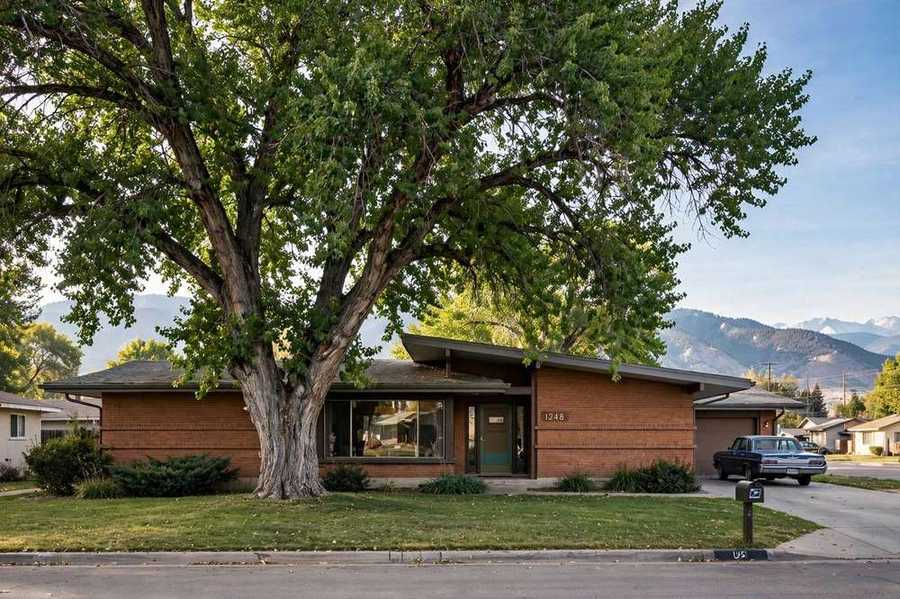
We have repaired water heaters through every kind of Lakewood building stock, from 1940s homes with tanks in crawlspaces to newer builds with closet mechanicals. That range means we know when a part will fix it — and when the tank is done.
Amazing company! These guys would put Mario and Luigi to shame. Very detail oriented and thorough with their jobs and surprisingly affordable. Also extremely quick with follow up and responding to messages and phone calls.
Very impressed did a great job
Amazing job very impressed
If the tank itself is sound and the failed part is a thermostat, heating element, burner component, or relief valve, a repair is the right call. If the tank is leaking from its shell, rusted through, or past its useful life — most tanks in Lakewood conditions last about 8 to 12 years — the honest answer is replacement. A leaking tank cannot be repaired.
Rumbling and popping usually mean sediment has baked onto the bottom of the tank, and the burner is boiling water trapped underneath it. Lakewood’s water averages about 105 mg/L hardness, about 6.1 grains per gallon, so scale builds up year after year. A flush and an anode rod check are the first steps.
Yes. At Lakewood’s elevation of about 5,518 feet, a gas unit loses about 4% of its rated input for every 1,000 feet above 2,000 feet. A nominal 40,000 BTU tank unit realistically delivers around 34,000 BTU here, so many units were never sized for Lakewood. We check sizing before promising a repair will fix lukewarm water.
Yes. Lakewood requires a permit for water heater replacement. Permit fees are valuation-based under the city’s current fee resolution, so there is no flat fee to quote — confirm the fee with the Lakewood Permit Counter at 303-987-7500.
Not seeing your question? Call the local team at (720) 909-6690 and describe what is happening — we will tell you honestly whether it needs a crew now.
Ask the local teamReach us any hour at (720) 909-6690. A real person answers, day or night. Tell us what the heater is doing — no hot water, noise, a leak, or a smell — and we will talk through what to check first.