Open 24 hours
Call any hour, any day — the phone is answered around the clock.
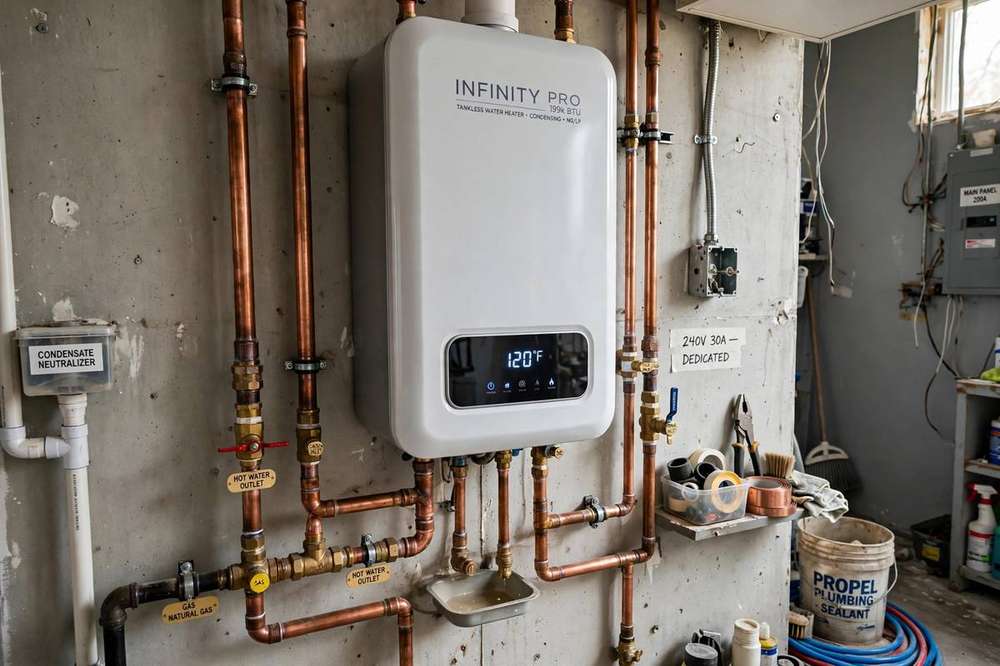
Tankless water heater installation in Lakewood, CO replaces a storage tank with a unit that heats water only when a tap opens — no tank to keep hot all day, and no running out mid-shower when the unit is sized right. Sizing right matters more here than at sea level: Lakewood sits at about 5,518 feet, and February inlet water is cold enough that the real temperature rise is around 70 degrees, not the mild rise printed on the box. We size for that reality, not the brochure.
Call any hour, any day — the phone is answered around the clock.
We explain what we found and what the options are before work starts.
Equipped vehicles and a clean job site when we leave.
A Lakewood business at 200 Union Blvd — neighbors serving neighbors.
A tankless install is a system change, not a swap: gas supply, venting, water treatment, and sizing all change with it. Here is what the work covers.
Flow rated against a February temperature rise of around 70 degrees and altitude derating of about 4% per 1,000 feet above 2,000 feet — so the unit keeps up in winter, not just in July.
A tankless unit draws far more gas at full fire than a tank heater. We check the existing gas line and meter capacity, and extend or upsize the line where it falls short — see our gas line installation page.
Sealed, dedicated venting replaces the natural-draft vent a tank heater used. The vent route and termination are part of the install, not an afterthought.
Water-heater replacement needs a City of Lakewood permit. Permit fees are valuation-based — confirm the fee with the Lakewood Permit Counter at 303-987-7500.
Isolation valves and a flush point are fitted at install, because Lakewood's moderately hard water means the unit needs descaling to hold its flow over the years. Our guide to how to maintain your tankless water heater for years of use covers the descaling routine, filter checks, and the altitude note that affects sizing.
High-efficiency condensing units make acidic condensate that needs a proper drain and neutralizer — fitted as part of the job.
Call (720) 909-6690 — open 24 hours, every day — and tell us what is happening.
A tankless water heater heats water only while a tap is open. There is no stored tank, no standby loss, and no fixed supply — but flow is limited by how hard the unit has to work.
The number on the box is a best case. A unit rated for 7 gallons per minute at a mild temperature rise delivers far less when Lakewood's February inlet water demands a rise of around 70 degrees — closer to 4.5 gallons per minute in real winter conditions — and altitude derating of about 4% per 1,000 feet above 2,000 feet trims output further at 5,518 feet. That is still enough for a shower and a tap at once in most homes, but it is not enough for three showers, a dishwasher, and a laundry load running together. Sizing starts with your household: how many people, how many bathrooms, and which fixtures run at the same time. A unit sized for a two-bathroom home in Carmody will not serve a five-bathroom home in Green Mountain, and we say so before you buy.
The other Lakewood reality is water. Denver Water hardness averages around 105 mg/L, about 6.1 grains per gallon — soft to moderately hard — and scale accumulates slowly inside a tankless heat exchanger until flow drops and the unit starts faulting. Annual descaling keeps it working, and our water softener installation page explains the preventive side. Be honest with yourself about the conversion too: for many Colorado households the conversion premium is not worth it, and a well-chosen tank heater is the better spend. Tankless earns its place where endless hot water matters — large families, back-to-back showers, soaking tubs — or where the tank's footprint needs to disappear. Our water heater replacement page covers the tank side of that decision.
| Factor | Tank water heater | Tankless water heater |
|---|---|---|
| Hot water supply | Fixed by tank size; runs out, then reheats | Heats on demand; no fixed supply when sized right |
| Winter flow in Lakewood | Unaffected by inlet temperature | Flow drops as inlet water gets colder — around 70-degree rise in February |
| Altitude effect | Burner output derates with altitude | Output derates about 4% per 1,000 ft above 2,000 ft |
| Energy use | Standby loss keeping the tank hot all day | No standby loss; heats only while water flows |
| Venting | Natural-draft vent in most existing homes | Sealed, dedicated venting required |
| Gas demand | Modest, steady draw | High draw at full fire; gas line and meter must be checked |
| Water quality | Scale settles in the tank over years | Scale narrows the heat exchanger; annual descaling needed |
| Best fit | Smaller households, like-for-like replacement | Large households, back-to-back showers, soaking tubs |
We count bathrooms, fixtures, and simultaneous use, then size against the February temperature rise and altitude derating — not the box rating.
The gas line, meter, and vent route are checked. If the line cannot carry the full-fire draw, the extension is planned before install day.
The old tank is drained, disconnected, and removed, and the water lines are prepared for the new unit.
The unit is mounted, the gas line is connected and pressure-tested, the sealed vent is run, and condensate drainage is fitted.
The permit inspection is arranged, the unit is tested at several fixtures at once, and we walk through descaling and the isolation valves with you.
Flow against the real February temperature rise and altitude derating, matched to your household's simultaneous use.
Proves the gas line holds before the unit fires, and confirms the line can carry the full-fire draw.
Checks the burner and venting are working together safely after install.
Isolation valves and a flush point fitted at install so annual descaling is a routine job, not a dismantling.
A hardness check at your address, because softener sizing starts from your water, not a city average.
Confirms the supply lines feeding the new unit are sound before the new heater depends on them.
Back-to-back showers empty a tank before the last person is done. A correctly sized tankless unit heats on demand, so the fourth shower is as hot as the first — as long as the unit is sized for simultaneous use, not just one shower.
The tank failed, and the household wants the footprint back. A wall-mounted tankless unit frees the closet, but the gas line needs upsizing first — planned before install day, not discovered during it.
One bathroom, one occupant, modest simultaneous use: the conversion premium buys little here, and a tank heater is the better spend. We say so, and the tank page covers that option.
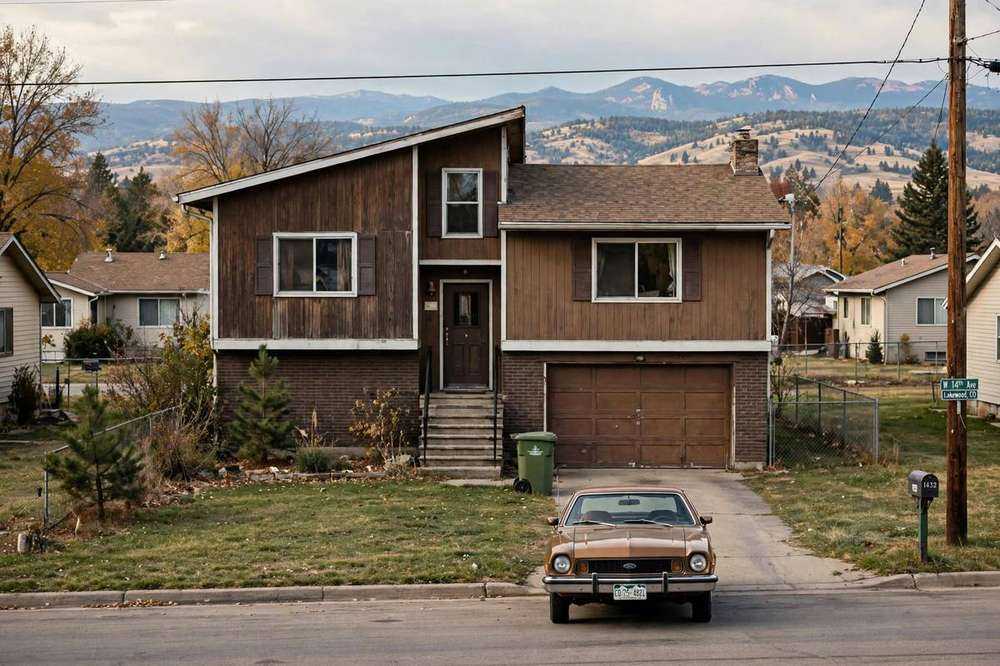
Lakewood's altitude and winters set the sizing rules, and its housing stock sets the install conditions. Most homes here were built in the 1960s and 70s with a tank heater on a natural-draft vent and a gas line sized for that tank — both change with a tankless conversion. The 2021 International Plumbing Code adopted by Lakewood governs the work, and a permit is required for water-heater replacement.
1970s split-levels where a tankless unit frees a closet but the gas line often needs upsizing first.
Larger homes with several bathrooms, where simultaneous-use sizing matters most.
Condos and townhomes where venting routes and shared walls make the vent plan the deciding factor.
Older homes where the gas line and venting are both due for review before any conversion.
1960s ranches where a tankless unit suits large families — if the gas meter can carry it.
About 4% per 1,000 feet above 2,000 feet trims burner output at 5,518 feet.
A temperature rise of around 70 degrees cuts rated flow to about 4.5 gallons per minute.
Around 105 mg/L, about 6.1 grains per gallon — scale builds slowly, and descaling keeps flow up.
Most Lakewood homes heat with gas, so the gas line question comes up on nearly every tankless job.
Before: a family of five runs the tank dry every morning and the last shower goes cold.
After: a tankless unit sized for two simultaneous showers heats on demand, and the fourth shower is as hot as the first.
Maintenance: Descale annually. Watch for flow drop — the first sign scale is narrowing the heat exchanger.
Before: a tank heater leaks from the bottom and the closet it occupied is unusable.
After: the tank is gone, a wall-mounted unit takes its place, the gas line is upsized, and sealed venting is run.
Maintenance: Keep the isolation valves accessible. A yearly flush is a routine job when the valves are fitted at install.
Before: a single-occupant condo owner is quoted a tankless conversion for one bathroom.
After: we explain the conversion premium buys little for one bathroom, and a tank heater is fitted instead.
Maintenance: The right answer is sometimes the smaller job — and the tank page explains that choice.
Tankless is a technology change, not a bigger tank. These are the problems it actually answers — and the limits that come with them.
A tank holds a fixed supply. A correctly sized tankless unit heats on demand, so back-to-back showers stay hot.
Tank heaters fail at the bottom after years of scale and corrosion. A wall-mounted unit has no stored tank to leak.
A tank occupies a closet or corner. A tankless unit mounts on the wall and frees that space.
A tank keeps water hot all day whether you use it or not. A tankless unit heats only while water flows.
Altitude and cold inlet water cut real flow. Sizing against the February rise — not the box rating — is what prevents disappointment.
The difference between a tankless unit that delights and one that disappoints is sizing. The box rating is a mild-climate number; Lakewood in February is not a mild climate.
Emergency Plumber Lakewood holds a 5.0-star rating from 9 Google reviews. Homeowners across Lakewood call us when a main line fails, a water heater quits, or a drain will not clear — and the reviews describe the same things we aim for on every visit: a clear explanation of what is wrong, the options before work starts, and a clean job site when we leave. Call (720) 909-6690 — open 24 hours, every day — to talk through what is happening at your home.
Yes, if it is sized for winter. February inlet water needs a temperature rise of around 70 degrees, which cuts a unit rated at 7 gallons per minute to around 4.5. Sizing against that winter figure — and against altitude derating — is what keeps the showers hot in February, not just in July.
Often, yes. A tankless unit draws far more gas at full fire than a tank heater, so the existing gas line and meter must be checked. If the line cannot carry the draw, it is extended or upsized as part of the job — see our gas line installation page.
Lakewood water is moderately hard — around 105 mg/L, about 6.1 grains per gallon — so scale accumulates slowly inside the heat exchanger. Annual descaling keeps flow up and prevents faulting. Isolation valves fitted at install make the flush a routine job.
It depends on the household. Tankless earns its place with large families, back-to-back showers, and soaking tubs. For smaller households the conversion premium is often not worth it, and a tank heater is the better spend. We will say so when that is the case — the comparison table on this page lays out both sides.
Yes. Water-heater replacement needs a City of Lakewood permit. Permit fees are valuation-based, so confirm the fee with the Lakewood Permit Counter at 303-987-7500.
Not seeing your question? Call (720) 909-6690 — open 24 hours, every day — and talk it through with the local team.
Ask the local teamReach us any hour at (720) 909-6690. Tell us about your household and your current heater, and we will talk through tank vs tankless honestly.