Open 24 hours
Call any hour, any day — the phone is answered around the clock.
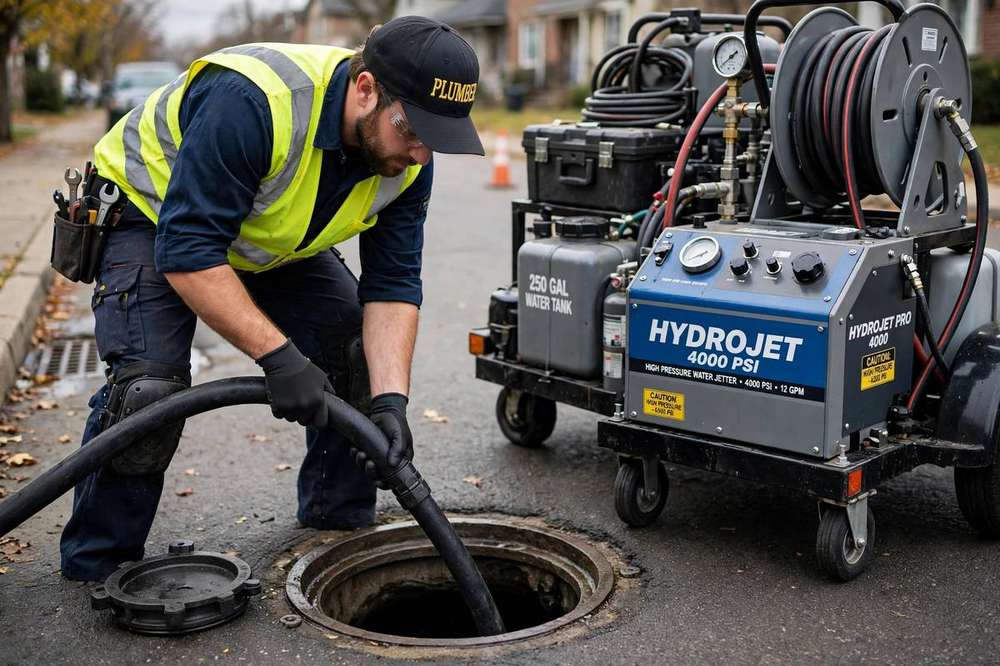
Hydro jetting in Lakewood, CO cleans a drain or sewer line with high-pressure water instead of a cutting cable. A cable punches a hole through a clog; a jet scours the whole inside of the pipe — grease, scale, and root mass come off the walls, and flow returns to the full bore. It is the method for lines that keep blocking, and the required pre-clean before a pipe lining job. But it starts with a camera, because jetting a collapsed or broken line makes things worse.
Call any hour, any day — the phone is answered around the clock.
We explain what we found and what the options are before work starts.
Equipped vehicles and a clean job site when we leave.
A Lakewood business at 200 Union Blvd — neighbors serving neighbors.
Jetting is a method with a sequence: look, jet, look again. Skipping the camera steps is how a line gets damaged. Here is what the work covers.
A camera run before jetting shows whether the line is sound enough to jet — a collapsed or badly cracked line is not.
Water at high pressure, delivered through a jetting nozzle, scours grease, scale, and root mass off the full circumference of the pipe.
A root-cutting nozzle clears root mass that has grown in through joints, where a cable only trims the middle.
Kitchen grease and mineral scale coat the walls of old cast-iron lines and narrow the bore. Jetting strips the coating back to the pipe.
A second camera run after jetting proves the line is clean and shows its true condition — the proof pass, and the basis for any lining decision.
Jetting is the required pre-clean before CIPP lining, because liner resin bonds only to clean pipe.
Call (720) 909-6690 — open 24 hours, every day — and tell us what is happening.
Hydro jetting pushes high-pressure water through a drain or sewer line, scouring the pipe walls clean instead of just opening a path through the blockage.
Lakewood's lines are the reason jetting earns its own page. Much of the city was built in the 1960s and 70s with cast-iron drains and clay laterals now 60 to 70 years old, and those materials collect exactly what jetting removes: grease that coats the walls, mineral scale that narrows the bore, and root mass that grows in through joints. A cable clears the middle and the clog returns in weeks; a jet strips the walls and the line flows at full bore again. Jetting is also the required step before a pipe lining job — liner resin bonds only to clean pipe — and the post-jet camera re-scope is the proof that the line is ready. Our drain cleaning page covers the first call when a drain blocks; this page covers the method for when it keeps blocking.
The camera-first rule is not a formality. High-pressure water in a collapsed line, a badly bellied line, or a line with a broken section can push water and debris into the soil or the house, and it can turn a repairable line into a replacement. So the sequence is fixed: camera, jet, camera again. The first pass judges whether the line can take the pressure and where the buildup is; the jet does the cleaning; the second pass proves the result and shows the line's true condition without the coating hiding it. If the second pass shows a collapsed section or a long belly, the honest next step is sewer line repair or replacement — and the jetting was not wasted, because now the decision is based on a clean, visible line.

We run the sewer camera first to see the buildup and to confirm the line is sound enough to jet. A collapsed or badly cracked line stops the job here.
The nozzle and pressure are matched to the pipe material and the buildup — cast iron, clay, and PVC take different approaches.
High-pressure water scours the full circumference of the pipe, clearing grease, scale, and root mass from the walls, not just the middle.
A second camera run proves the line is clean and shows its true condition — cracks and bellies that the coating was hiding.
If the line is clean and sound, the job is done. If the camera shows structural damage, we talk through repair, lining, or replacement from the footage.
Runs before and after jetting — the first pass judges whether the line can take pressure, the second proves the clean.
Delivers high-pressure water through the jetting nozzle to scour the full pipe wall.
Different nozzles for different jobs: scouring grease and scale, cutting root mass, and flushing debris downstream.
Marks the line's path and depth so the jetting entry point and any problem spot are found fast.
Handles smaller blockages and confirms flow, and clears the way when a line is too blocked to jet first.
Clear root mass that has grown in through joints, where a standard nozzle only trims the middle.
Grease has coated the cast-iron walls and narrowed the bore. A cable opens the middle and it blocks again; jetting strips the coating and the drain flows at full bore.
Root mass has grown in through a clay tile joint. Jetting clears the mass, and the post-jet camera shows whether the joint can be lined or the section needs repair.
The liner cannot bond to a dirty pipe. Jetting is the required pre-clean, and the post-jet camera proves the line is ready before the liner goes in.
Lakewood's 60-to-70-year-old cast-iron and clay lines are the jetting story. Grease from decades of kitchens, scale from moderately hard water, and roots from mature trees all narrow the same pipes, and a cable only buys weeks. The 2021 International Plumbing Code adopted by Lakewood governs drain work, and jetting is the method that matches the material: it cleans without cutting, which matters when the pipe is old and thin.
1940s-50s homes with cast-iron drains where grease and scale have narrowed the bore over decades.
Large lots with mature trees, where root mass grows in through clay tile joints.
Mid-century laterals where jetting is the pre-clean before a lining decision.
The oldest pipe in the city, where the camera-first rule matters most — thin cast iron does not forgive a careless jet.
1970s split-levels with lower-level drains below grade, where a slow drain is the first sign of buildup.
Sixty years of mineral scale and grease coat old cast-iron walls and narrow the bore.
Roots find hairline cracks in clay tile and grow into a mass that a cable only trims.
Kitchen grease coats drain walls and catches everything that follows — jetting strips it back to the pipe.
Liner resin bonds only to clean pipe, so every lining job starts with a jet.
Before: a 1960s kitchen drain blocks every few weeks and the cable clears it for a month.
After: jetting strips the grease and scale off the cast-iron walls, and the drain flows at full bore for the first time in years.
Maintenance: Keep grease out of the drain. Jetting fixes the coating; habits decide how fast it comes back.
Before: a sewer line backs up at the same clay joint, and the cable trims the roots each time.
After: jetting clears the mass, and the post-jet camera shows the joint is sound enough to line.
Maintenance: The camera after is the point — a clean line shows its true condition, and the lining decision follows from it.
Before: a lateral is scheduled for lining, but the pipe walls are coated in grease and scale.
After: jetting cleans the line, the camera proves it, and the liner bonds to clean pipe.
Maintenance: A lining skipped the jetting step is a lining that may not hold — the pre-clean is not optional.
Jetting is a method, not a cure for every drain. These are the problems it answers — and the line conditions that stop it.
A drain that blocks again weeks after a cable clearing has a wall problem, not a clog problem. Jetting cleans the walls.
Kitchen grease coats the walls and narrows the bore. Jetting strips the coating back to the pipe.
Roots grow in through joints and form a mass. A root-cutting nozzle clears what a cable only trims.
Decades of mineral scale narrow old cast-iron pipe. Jetting restores the bore without cutting the pipe.
A collapsed line, a long belly, or a broken section stops the job — the camera finds it first, and repair or replacement follows.
Jetting is powerful, and power without judgment damages old pipe. The judgment is the camera work before and after — and the willingness to stop when the line says stop.
Emergency Plumber Lakewood holds a 5.0-star rating from 9 Google reviews. Homeowners across Lakewood call us when a main line fails, a water heater quits, or a drain will not clear — and the reviews describe the same things we aim for on every visit: a clear explanation of what is wrong, the options before work starts, and a clean job site when we leave. Call (720) 909-6690 — open 24 hours, every day — to talk through what is happening at your home.
It is when the camera goes first. The pre-jet camera run shows whether the line is sound enough to take the pressure, and the nozzle and pressure are matched to the pipe material. A collapsed or badly cracked line is not jetted — it is repaired or replaced.
Drain cleaning is the service — clearing a blocked drain. Hydro jetting is a method within it: high-pressure water that scours the whole pipe wall, where a cable only punches a hole through the clog. Our drain cleaning page covers the first call; jetting is for lines that keep blocking.
A root-cutting nozzle clears the root mass that has grown in through joints. Jetting does not seal the joint, though — the roots can grow back. The post-jet camera shows whether the joint can be lined or the section needs repair.
Yes. Liner resin bonds only to clean pipe, so jetting is the required pre-clean before every CIPP lining job, and the post-jet camera proves the line is ready.
Not seeing your question? Call (720) 909-6690 — open 24 hours, every day — and talk it through with the local team.
Ask the local teamReach us any hour at (720) 909-6690. Tell us which drain, how often it blocks, and what has been tried, and we will talk through the next step.