Clear arrival updates
Useful updates and clear timing once a visit is booked.
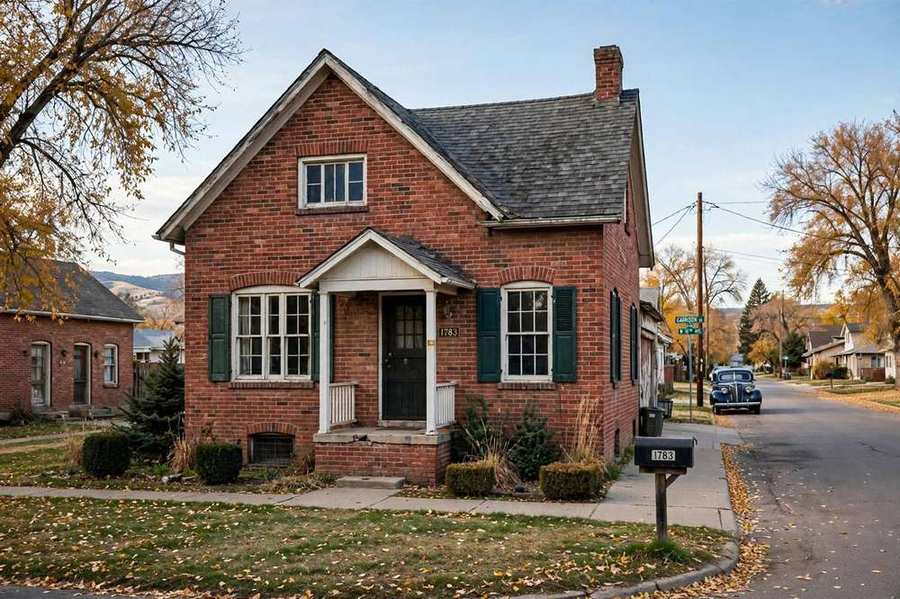
Morse Park holds Lakewood's oldest surviving housing core, and that history is the plumbing story. The city survey counted 335 primary buildings dating from 1900 to 1940, most of them from the 1930s, in the western Dover-to-Independence stretch, and the Kawanee Gardens subdivision was platted in 1928. Homes from that era can still carry lead-era supply lines, cast-iron drains and clay laterals, and the laterals predate the city itself, since Lakewood was not incorporated until 1969. We are open 24 hours, every day, at (720) 909-6690.
Useful updates and clear timing once a visit is booked.
Review the approach before deciding, with the work explained in plain terms.
Equipped vehicles and respectful cleanup.
Neighbors serving neighbors with follow-through.
Morse Park is mainly single-family homes of three to four bedrooms, with small apartments in the mix and a large number of horse properties. The city's 2019 historic survey found 335 primary buildings dating from 1900 to 1940, about 18 percent of the neighborhood's buildings, with 15 from 1900 to 1919, 69 from the 1920s, 192 from the 1930s and 59 from 1940, and about 383 buildings were shown on 1937 USGS maps. The majority of housing was built in 1940 to 1959 and 1960 to 1979. Homes from the 1900-1940 core typically have galvanized or lead-era supply lines, cast-iron drains and clay laterals, and pre-1951 lead service lines are a real screening question for the 1920s-30s core. The 1940s-70s remainder typically has galvanized or copper supply lines, cast iron or ABS drains, and clay or Orangeburg laterals. Denver Water's 2026 Sheridan Boulevard replacement of a 1931 cast-iron main, from 13th to 29th Avenue, runs along the neighborhood's eastern edge, with lead service lines replaced where encountered.
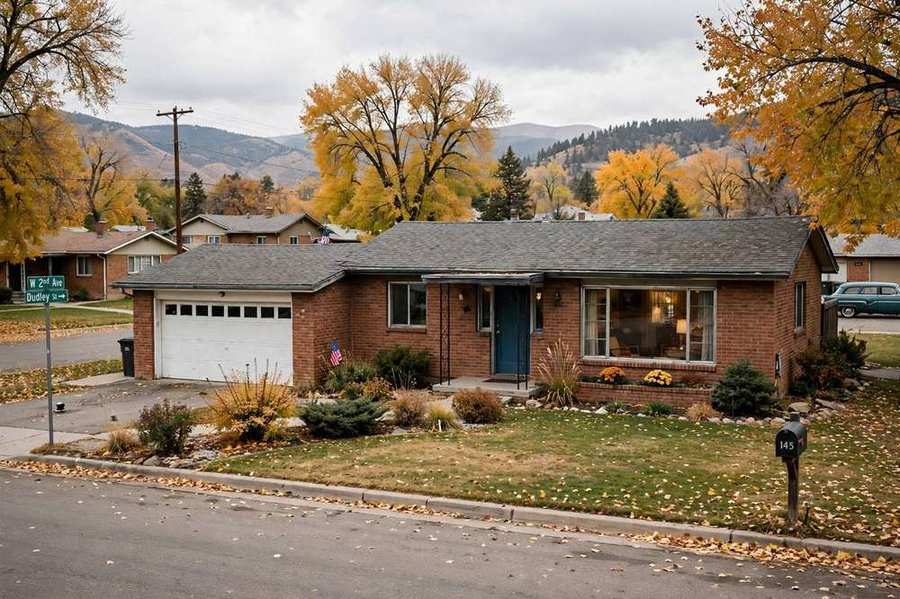
Morse Park holds Lakewood's oldest surviving housing core. The 1920s-30s core brings lead-era supply lines and century-old laterals, the postwar remainder brings galvanized and clay, and the Sheridan Boulevard edge brings the 2026 main replacement into the picture.
In the postwar remainder, galvanized supply lines narrowed from the inside cut pressure fixture by fixture and turn the water brown after the taps sit unused. Modern pipe through the whole home replaces the failing supply runs and brings the flow back.
View service →02A clay lateral in the ground for eighty or ninety years can be collapsed or root-filled at several joints at once. Past repair, it gets a full replacement: modern pipe, correct slope, and a camera-verified connection to the district main.
View service →03On a prewar lot the camera matters most, because the lateral predates Lakewood's 1969 incorporation and no one alive remembers how it was laid. The camera pass reveals roots, breaks, bellies and bad joints, and the repair matches what it reveals.
View service →04A prewar leak can sit in a wall, under a slab or out in the yard, and a service-line leak can surface as a damp patch far from any fixture. We locate the leak with listening equipment, pressure testing and a camera pass, rather than opening a prewar wall to hunt for it.
View service →05Lining or bursting a pipe repairs or replaces a sewer line with far less digging, which matters on a prewar lot where the yard, the driveway and the 1928 plat lines sit over the lateral. The camera decides whether trenchless fits a line this old.
View service →06In the oldest core a failure can be a century-old lateral giving up all at once, and a burst pipe, a sewer backup or a heater failure will not wait for business hours. Around the clock, every day of the week, the line is answered at (720) 909-6690.
View service →07In the prewar core, slow drains usually mean the main line rather than one fixture, and the main line is usually a clay lateral with roots at the joints. We run a snake through to clear the blockage, then scour the pipe wall with hydro jetting so the clog does not reform at the same joint.
View service →08A tank that stops heating, leaks at its base, or loses its pilot gets diagnosed where it stands and repaired if the unit is worth saving. In a prewar house the tank often sits in a basement that has seen a century of winters, and the venting and sizing have to fit the house.
View service →09The Crown Hill Ditch crosses the northwest corner here, and the 1928 Kawanee Gardens parcels were laid out with irrigation-ditch laterals, so backflow is a drainage conversation as well as a sewer one. We test assemblies each year, file the result with the water provider, and repair or replace any assembly that fails.
View service →The prewar core sets the order of work here, because the oldest laterals in the batch predate the city itself. Morse Park holds 335 primary buildings dating from 1900 to 1940, most of them from the 1930s, and Kawanee Gardens was platted in 1928, so a lateral can be older than Lakewood's 1969 incorporation. The work is built to the 2021 International Plumbing Code, which Lakewood adopted in Municipal Code Chapter 14.05, over the Colorado Plumbing Code underneath. Lakewood requires a permit for sewer replacement and repiping, water heater replacement, water service lines, fixture installs, gas piping, and drain and sewer work. Fees are valuation-based under Resolution R-2025-69, in effect since 1 January 2026, so the figure depends on the job. The Lakewood Permit Counter answers at 303-987-7500 to confirm a fee. On a prewar lot we check the service line material before any supply work, because a lead line changes the plan.
At eighty or ninety years old, a clay lateral can be collapsed or root-filled at several joints, and the camera is the only way to know before digging. Whether the answer is a trenchless repair or a full replacement follows what the camera found, not what the yard suggests.
The 1920s-30s core is where the lead question is most grounded in Lakewood. The usual approach is to check eligibility by address through the Denver Water Lead Reduction Program before any supply-line work is planned, and to note the Sheridan Boulevard main replacement along the eastern edge, where Denver Water is replacing a 1931 cast-iron main and lead service lines where they are encountered.
The Crown Hill Ditch crosses the neighborhood's northwest corner, and the 1928 Kawanee Gardens parcels were laid out with irrigation-ditch laterals. That makes backflow a drainage conversation here, not just a sewer one, and the ditch side of a lot needs the assembly checked as well as the house side.
Chapter 14.05 of the Lakewood Municipal Code, through Ordinance O-2023-16, adopts the 2021 IPC. Residential work in the prewar and postwar houses here follows Chapters 25-33 of the 2021 IRC.
Resolution R-2025-69 sets permit fees by the value of the job, under a valuation schedule effective 1 January 2026. The Lakewood Permit Counter at 303-987-7500 confirms the figure before permitted work starts.
In Morse Park the lead-service-line and century-old lateral conversation is historically grounded rather than generic. The 335 buildings from 1900 to 1940, most of them from the 1930s, sit beside a postwar remainder from 1940 to 1979, so the prewar core and the postwar remainder fail in different places.
Lead-era supply lines, cast-iron drains and clay laterals run through the prewar core, and the earliest builds may have lead service lines. The check runs by address through the Denver Water Lead Reduction Program, and it is worth doing before supply-line work is planned.
A lateral in the ground since the 1920s or 1930s can be collapsed or root-filled at several joints at once. Roots get in at the joints, and a line that keeps blocking at the same joint is usually telling you about the joint rather than the clog.
The postwar remainder, built mostly from 1940 to 1979, carries galvanized and copper supply with cast-iron and ABS drains and clay or Orangeburg laterals. Corrosion narrows the galvanized runs from the inside, so pressure drops at every fixture and the water runs brown after the taps sit unused.
Outdoor lines on the horse properties here sit exposed to the first freeze, which usually lands between late October and mid-November. A hydrant or exterior line that froze once freezes again unless it is drained, insulated or rerouted.
Morse Park is navigated by its parks and its historic subdivisions. The park itself sits at the center, Crown Hill Park with its horse arena serves the north neighborhoods, and the 1928 Kawanee Gardens plat and Glen Creighton mark the historic core. Sheridan Boulevard runs along the eastern edge, where the 2026 main replacement is under way.
Morse Park itself is the neighborhood's namesake and its central landmark, and the streets around it hold the prewar core.
Kawanee Gardens was platted in 1928, and its parcels were laid out with irrigation-ditch laterals. It is the historic heart of the neighborhood.
Glen Creighton is a named historic subdivision inside Morse Park, with a curvilinear design by Saco R. DeBoer from the 1920s and 1930s.
Crown Hill Park, with its horse arena, serves the north neighborhoods and is the landmark for Morse Park's horse properties.
Sheridan Boulevard runs along the neighborhood's eastern edge, where Denver Water's 2026 replacement of a 1931 cast-iron main runs from 13th to 29th Avenue.
We serve Morse Park across its prewar core and its postwar remainder, from the Dover-to-Independence stretch to the eastern edge along Sheridan Boulevard, including the horse properties. The areas below are the parts of the neighborhood and the nearby north-Lakewood neighborhoods we work in most.
Eiber, the next neighborhood over, runs from 1860s farmhouses to 1920s streetcar streets and the WWII building surge, so a single block can hold lead-era, galvanized, Orangeburg and copper pipework in sequence.
Creighton, to the south, holds a large share of the city's oldest central housing, built 1940–59, where galvanized supply lines and clay laterals are at the end of their life and the lead-line check comes first.
Applewood's 1959–67 brick ranches are the Orangeburg and galvanized test case to the north, with long laterals under mature-tree lots.
NE Lakewood, along the eastern edge, mixes 1940s–50s homes and horse properties with multifamily buildings, and its galvanized, cast-iron and clay pipework fails in the same era patterns as Morse Park's.
The jobs below are the patterns that come up most often in Morse Park, described as typical calls rather than one specific visit. The prewar core and the postwar remainder fail in different places.
A home from the 1930s core with original supply lines is where the lead question is most grounded in Lakewood. The usual approach is to check eligibility by address through the Denver Water Lead Reduction Program before any supply-line work is planned, and to note the Sheridan Boulevard main replacement along the eastern edge.
At eighty or ninety years old, a clay lateral can be collapsed or root-filled at several joints. The camera shows the damage, and the decision between a trenchless repair and a full replacement follows what the camera found.
In a 1940s-70s home where pressure has dropped at every fixture and the water runs brown after sitting, corroded galvanized supply lines are usually the cause. We test pressure at several fixtures and assess whether the run or the whole system needs replacing.
Arrived in less than an hour and completed the job in less than two hours for a very good price.
Very impressed did a great job
great service
The year here is the oldest year in the city. Spring brings root growth in century-old laterals, summer opens the window for the heavy work, the fall freeze finds the horse properties, and winter is when the prewar lines give up.
In spring, roots wake up and grow into the joints of clay laterals, so backups and slow drains spike in April and May, and the century-old laterals here are the most vulnerable in the city. A camera check in early spring catches root intrusion before it becomes a backup.
Warm weather is the right window for repiping and sewer work, because the ground is dry and access is easier. It is also the season for irrigation and backflow work around the ditch heritage.
The first hard freeze usually hits in late October or November, and the horse properties' exterior lines are the first to feel it. A hydrant or exterior line that froze last winter gets protected first.
Frozen and split pipes are the top call from December through February. February 2021 is the reminder of how cold it can get: a high of 1F and a low of -14F on 14 February. In the prewar core a century-old line can give up all at once in a hard freeze.
Morse Park sits in north Lakewood, and the neighborhoods below are the ones around it. If you are in one of them, the same prewar and postwar era issues usually apply.
A prewar house asks different questions than a newer one. These five are worth asking before any work starts, and the answers should name the house, its age and its pipe.
Get the problem, the fix and what gets opened or moved described in plain words, starting with the age of the house. A lead-line screening plan for a 1930s core house looks nothing like a fixture plan for a postwar remainder house.
The failed part on the bench is the simplest proof, with camera footage and a pressure reading behind it. In the prewar core the camera matters most, because the lateral can be older than the city and no one remembers how it was laid.
A lateral replacement or a repipe in the prewar core is where the permit question comes up first. Gas piping, sewer work, a water heater swap and a new service line usually need a permit in Lakewood. Ask who pulls it and what it covers.
Before the visit, make sure the fixture, the water heater and the cleanout can be reached. In a prewar house it helps to know whether the cleanout sits in the basement or out in the yard, and to have the shutoff found first.
Questions after the visit go to (720) 909-6690, the same number that answered the first call.
The work here is governed by the 2021 International Plumbing Code, adopted by Lakewood under Municipal Code Chapter 14.05, Ordinance O-2023-16, with the Colorado Plumbing Code underneath it. In the prewar core the code covers the lateral and repipe work that comes up most often.
For the big jobs, a permit is needed, and in Morse Park that usually means a water heater replacement, a service line, gas piping, or sewer and repipe work in the 1920s-30s core. Before the work is agreed, we confirm which jobs need one.
Lakewood's permit fees follow valuation under Resolution R-2025-69, which took effect 1 January 2026, so no flat figure applies. The Lakewood Permit Counter at 303-987-7500 confirms the fee for a given job.
Prewar houses and the postwar remainder built from 1940 to 1979 fall under Chapters 25-33 of the 2021 International Residential Code for their residential plumbing work.
Testable backflow assemblies are tested once a year by a certified tester, and the results go to the water provider. The Crown Hill Ditch side of the neighborhood makes this the assembly that comes up most often here, because the 1928 ditch laterals are a drainage conversation as well as a sewer one.
Denver Water's Lead Reduction Program covers pre-1951 homes, and screening runs address by address, since no Lakewood-only lead-line count exists. In Morse Park the check matters more than anywhere else in the batch, because the neighborhood holds the largest concentration of pre-1940 homes in north Lakewood.
If you smell gas, leave the property first and call 911 or Xcel Energy, then call a plumber. Never remain inside to investigate a suspected leak.
The city survey counted 335 primary buildings dating from 1900 to 1940, most of them from the 1930s, in the western Dover-to-Independence stretch, and about 383 buildings were shown on 1937 USGS maps. The Kawanee Gardens subdivision was platted in 1928. No other neighborhood in this batch holds that concentration of pre-1940 homes.
Homes built before 1951 may have lead service lines, and the 1920s-30s core is where the screening question is most grounded in Lakewood. The Denver Water Lead Reduction Program covers pre-1951 homes, and Denver Water's 2026 Sheridan Boulevard main replacement is replacing lead service lines where they are encountered along the eastern edge. The check is by address.
Homes from the 1900-1940 core typically have galvanized or lead-era supply lines, cast-iron drains and clay laterals. The 1940s-70s remainder typically has galvanized or copper supply lines, cast iron or ABS drains, and clay or Orangeburg laterals. The material is always era-based, never assumed for a single house without checking.
Denver Water's 2026 replacement of a 1931 cast-iron main on Sheridan Boulevard, from 13th to 29th Avenue, runs along Morse Park's eastern edge, with lead service lines replaced where encountered.
The Crown Hill Ditch crosses the neighborhood's northwest corner, and the 1928 Kawanee Gardens parcels were laid out with irrigation-ditch laterals. It is a drainage and backflow conversation, not a sewer one.
Not seeing your question? Our local team can help you understand urgency, scheduling and what to expect.
Ask the local teamCall (720) 909-6690 any hour. We are open 24 hours, every day, for Morse Park's prewar core and its postwar streets alike.