Open 24 hours
Call any hour, any day — the phone is answered around the clock.
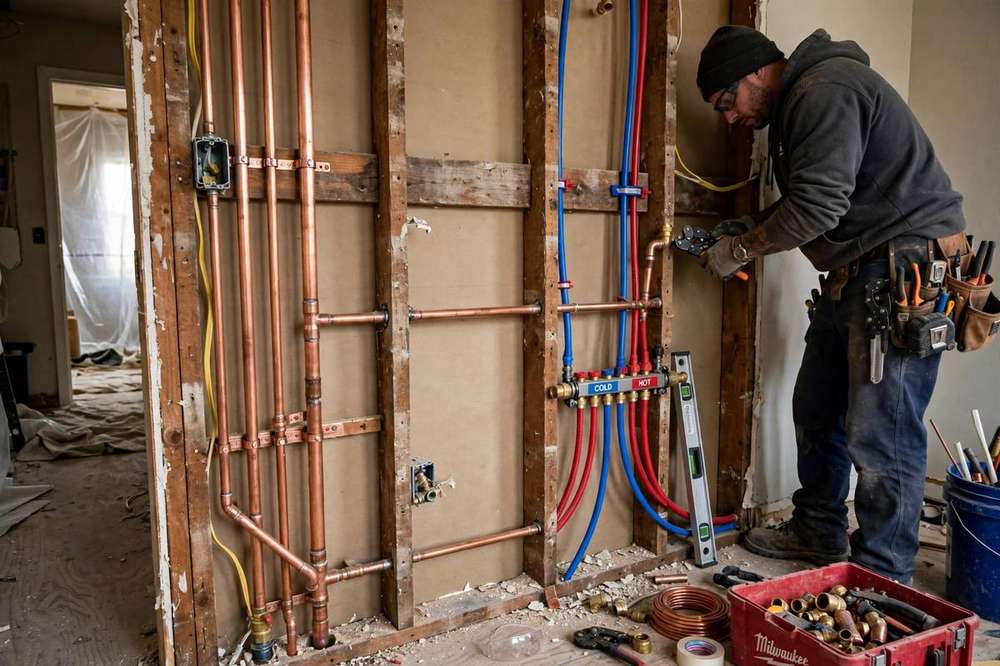
Whole house repiping in Lakewood, CO replaces the water supply pipes throughout your home — every hot and cold run, from the main to the last fixture. It is the answer when the problem is the system, not one pipe: low pressure at every tap, rust-colored water, and leaks that keep appearing in different rooms. Most Lakewood homes that need it were built in the 1940s, 50s, 60s, or 70s, and their galvanized and cast-iron pipe has simply run out of years.
Call any hour, any day — the phone is answered around the clock.
We explain what we found and what the options are before work starts.
Equipped vehicles and a clean job site when we leave.
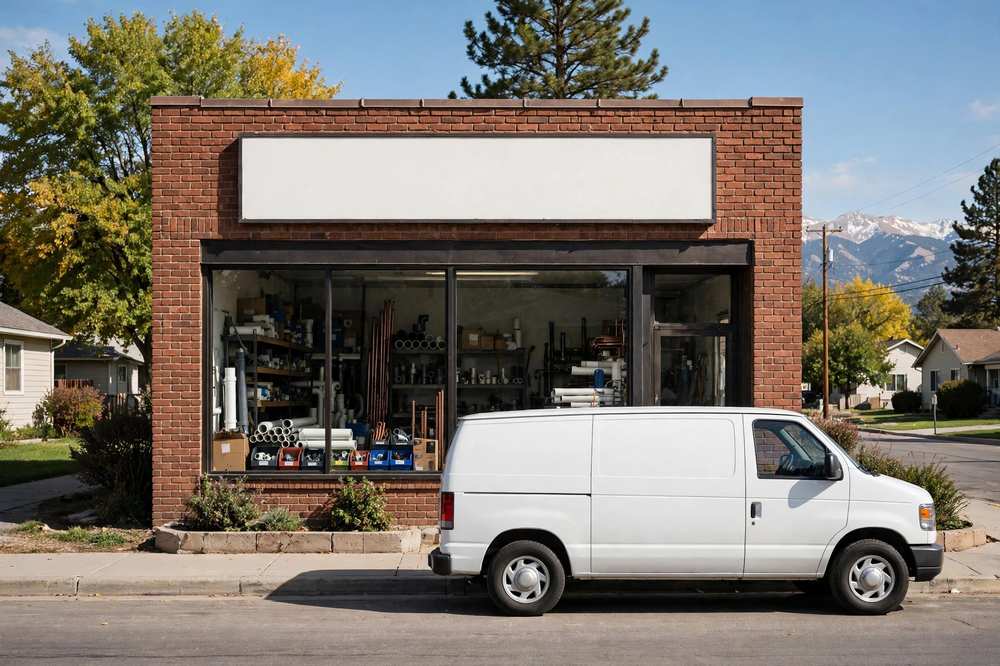
A Lakewood business at 200 Union Blvd — neighbors serving neighbors.
A repipe is a whole-system job, planned room by room so the house stays livable while the work runs. Here is what it covers.
Every hot and cold supply run, from the water main entry to each fixture — not a patch on the worst pipe.
Era-appropriate materials for the house: copper where it suits, PEX where its flexibility helps — chosen for the home, not a brand.
Shut-off valves at every fixture, so any future repair isolates one tap instead of the whole house.
Every run is pressure-tested before walls close, and flow is checked at every fixture at the end.
Repiping needs a City of Lakewood permit. Permit fees are valuation-based — confirm the fee with the Lakewood Permit Counter at 303-987-7500.
We plan access points to keep openings small and tell you what patching follows, so the finish work is no surprise.
Call (720) 909-6690 — open 24 hours, every day — and tell us what is happening.
Repiping means replacing the water supply system of the whole house at once — the point where fixing one leak at a time has stopped making sense.
The trigger is a pattern, not a single event: three or more leaks in different places, pressure that has faded at every tap, rust-colored water when a tap first opens, or galvanized pipe that has narrowed inside with corrosion until a shower is a trickle. Homes of the 1940s-70s typically have galvanized steel supply pipe and cast-iron drains, and at 50 to 75 years old the galvanized pipe is corroding from the inside out. Freeze-thaw cycles speed it up, and the 2021 cold snap — a record high of 1 degree on February 14 — reminded Lakewood how hard winter is on old pipe. A single leak in a sound system is a leak detection call; a system that keeps leaking is a repipe.
The materials are copper and PEX, and the choice is the house's, not a sales sheet's. Copper is rigid, familiar, and proven in Lakewood's older homes; PEX is flexible, which helps it ride out freeze-thaw movement and lets it run through walls with fewer joints — and fewer joints mean fewer future leak points. Neither is a brand claim: the material is chosen for the run, the water, and the access. The work runs room by room, with water restored at the end of each working day where the plan allows, and the old galvanized pipe is left in the walls or removed as access allows. A repipe often pairs with a water-heater change, since the new system deserves a heater that is not at the end of its own life — see our water heater replacement page and our slab leak repair page for the under-slab side of the same decision.
We map the existing runs, count the fixtures, and look at the pipe that is visible — basement, crawl space, and utility rooms tell most of the story.
Copper or PEX is chosen run by run, access points are planned to keep wall openings small, and the sequence is set room by room.
The City of Lakewood permit is arranged before work starts. Permit fees are valuation-based — confirm with the Permit Counter at 303-987-7500.
Old runs are replaced one section at a time, new fixture stops are fitted, and each run is pressure-tested before the wall closes.
Flow and pressure are checked at every fixture, the permit inspection is arranged, and the old system is decommissioned.
Looks inside accessible runs to confirm corrosion and narrowing before the plan is set.
Proves every new run holds before walls close, and shows the old system's pressure loss in numbers.
Make code-correct PEX connections with fewer joints than rigid pipe needs.
For copper runs, where the house and the run call for it.
Access points are planned room by room to keep openings small and patching straightforward.
New shut-offs at every fixture, and a manifold layout where it suits the house.
The galvanized supply is corroding throughout, and each repair buys months. A full repipe replaces the system, and the pressure at every tap comes back with it.
The galvanized pipe is flaking corrosion into the water. Flushing helps for a week; a repipe in copper or PEX is the durable answer, and the water clears.
The galvanized runs have narrowed inside with corrosion. No single repair restores flow — the system needs replacing, run by run.
Lakewood's housing stock is the repipe story: a citywide median year built of 1977, with more than half of homes built before 1980 and 40 percent built between 1960 and 1979. That is a city full of galvanized supply pipe and cast-iron drains at the end of their service life, stressed further by bentonite clay movement and freeze-thaw cycles. The 2021 International Plumbing Code adopted by Lakewood governs the work, and a permit is required.
The deepest era stack in Lakewood — pre-war through 1960s-70s infill — where galvanized, cast iron, and clay all appear in one house.
1950s-60s ranches where galvanized supply corrosion and clay laterals fail together.
Mid-century homes where low pressure at every tap is the classic repipe symptom.
1940s-50s homes with galvanized supply and long laterals under large lots.
1940s-50s smaller-lot homes, typically basement-built, where access runs through the basement.
Homes of the 1940s-70s typically have galvanized pipe at 50 to 75 years old — corroding from the inside out.
Seasonal movement speeds corrosion in old steel pipe, and the 2021 cold snap showed the limit.
Pressure lost at every tap at once points to the system, not one fixture.
The drain side of the same era ages alongside the supply — the camera decides whether drains join the job.
Before: a 1958 ranch has three leaks in two years, each in a different room, and the pressure fades a little more each time.
After: the whole supply system is replaced, the pressure at every tap comes back, and the next two years bring no leaks.
Maintenance: Keep the new fixture stops accessible. A single-fixture issue is now a one-tap shut-off, not a whole-house shut-down.
Before: a 1960s home runs rust-colored water every morning until the tap clears.
After: the corroded galvanized runs are replaced, and the water runs clear from the first second.
Maintenance: A water test after the repipe confirms the discoloration is gone, not just diluted.
Before: a shower is a trickle and the kitchen tap takes twice as long to fill a pot.
After: new runs sized to the fixture load restore flow at every tap, and the difference is immediate.
Maintenance: Flow is checked at every fixture at the end of the job — not assumed from one tap.
A repipe answers system-wide problems. Single-pipe problems belong on the leak and slab pages — these belong here.
Three or more leaks in different places mean the pipe is failing everywhere at once. A repipe replaces the system instead of chasing it.
Galvanized pipe narrows inside with corrosion until flow fades at every tap. New runs restore it.
Rust-colored water is galvanized corrosion flaking off inside the pipe. Replacement ends it at the source.
Corroded and scaled pipe changes how water moves and sounds. A new system runs quieter — though water hammer has other causes too, and we check.
Under-slab leaks that appear in different rooms are a system failure, not a spot failure. A repipe routes water around the slab entirely.
A repipe is a week of living in a house that is being worked on, and the plan matters as much as the pipe: which rooms first, where the water stays on, and how the walls close.
Emergency Plumber Lakewood holds a 5.0-star rating from 9 Google reviews. Homeowners across Lakewood call us when a main line fails, a water heater quits, or a drain will not clear — and the reviews describe the same things we aim for on every visit: a clear explanation of what is wrong, the options before work starts, and a clean job site when we leave. Call (720) 909-6690 — open 24 hours, every day — to talk through what is happening at your home.
The trigger is a pattern: three or more leaks in different places, pressure lost at every tap, or rust-colored water. One leak in an otherwise sound system is a repair — see our leak detection page. A system that keeps leaking is a repipe.
It depends on the run and the house. Copper is rigid and proven; PEX is flexible, which helps it ride out freeze-thaw movement and means fewer joints. We choose run by run for your home, and we make no brand claims either way.
Water is restored at the end of each working day where the plan allows. The work runs room by room, so the house stays livable — but there will be periods without water while a section is being replaced, and we plan those with you.
Yes. Repiping needs a City of Lakewood permit. Permit fees are valuation-based, so confirm the fee with the Lakewood Permit Counter at 303-987-7500.
Not seeing your question? Call (720) 909-6690 — open 24 hours, every day — and talk it through with the local team.
Ask the local teamReach us any hour at (720) 909-6690. Tell us how many leaks, where they were, and what the pressure is doing, and we will talk through the next step.