Cleared, then checked
We clear the blockage and run water to confirm the drain actually flows — not just that the cable went through.
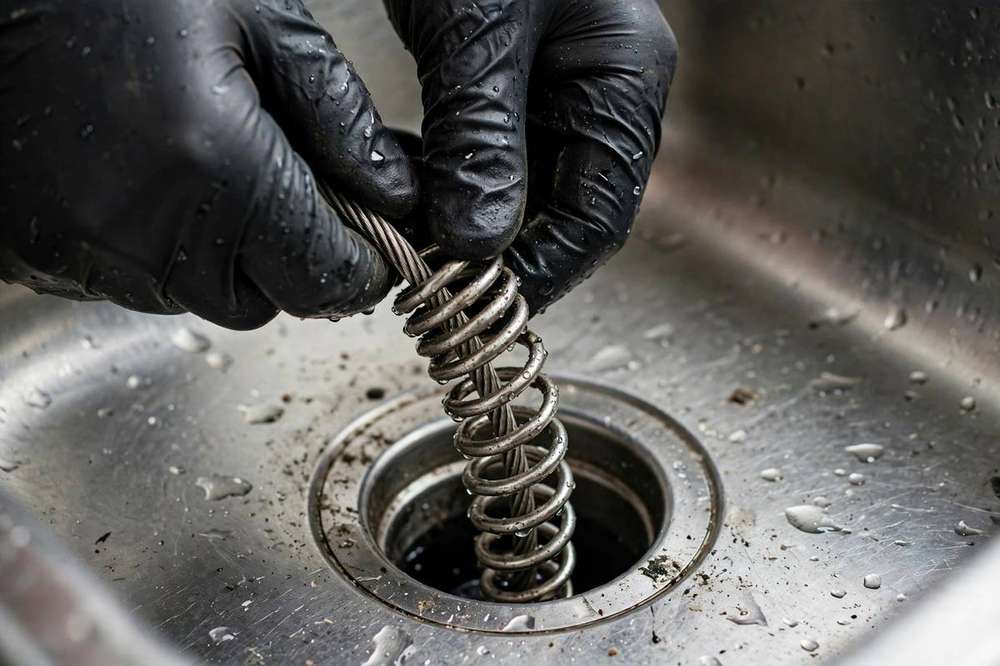
drain cleaning Lakewood CO — A slow sink is an annoyance. A drain that backs up every few weeks is a symptom. Drain cleaning in Lakewood, CO, from Emergency Plumber Lakewood, clears the blockage — and when the clog keeps returning, we look for the reason with a camera. Call (720) 909-6690. We are open 24 hours, every day, from 200 Union Blvd in Lakewood.
We clear the blockage and run water to confirm the drain actually flows — not just that the cable went through.
A drain that clogs again within weeks is usually a structural problem in the line, not a deeper clog. We scope it instead of charging for the same clearing twice.
You hear what is blocking the drain, what the clearing involves, and what comes next before any work starts.
We work in Lakewood’s neighborhoods every day, from Applewood to Green Mountain, and we stand behind the work we leave behind.
Drain cleaning covers the blockage inside the house and out to the lateral — and the diagnosis that tells you whether clearing it is enough.
Grease, soap scum, hair, and food waste build up in branch lines. We clear the line and check the trap and vent so the drain stays clear.
When every fixture is slow or the lowest drain backs up, the blockage is in the main line. We auger the main and confirm flow at the cleanout.
A clog that returns after a clearing points to roots, a belly, or a separated joint in the lateral. That is a camera job, not a third auger visit.
Grease and scale that a cable only pokes through get washed out with high-pressure water. See hydro jetting for when jetting is the right call.
We wipe down the work area, run every affected fixture, and walk you through what was blocking the drain and what to avoid flushing.
A drain that is backing up will not fix itself. Call any hour and talk to the Lakewood team about what is happening.
Drain cleaning in Lakewood is the work of restoring flow through lines that are, in most of the city, fifty years old or more. Lakewood’s median year built is 1977, and 56% of homes were built before 1980. That means cast-iron drain stacks in 1960s–70s homes, clay-tile laterals in the oldest blocks, and decades of grease, scale, and root growth narrowing the pipe from the inside. A cable clears the blockage. A camera tells you whether the pipe itself is still sound. For a kitchen sink, our guide to how to unclog a kitchen sink drain without harsh chemicals covers hot water, a plunger, and patience — and why chemicals are a bad idea.
The line between a drain problem and a sewer problem matters. Drain cleaning clears a blockage inside the house and out to the lateral. Sewer line repair fixes the lateral itself when it is cracked, bellied, or collapsed. We keep that line explicit: if the camera shows a structural failure, we say so and point you to sewer line repair instead of selling another clearing. Homes of the 1940s–70s era typically have cast-iron drains and clay laterals; homes from the 1980s on typically have ABS or PVC. Either way, the pipe’s era shapes what we expect to find.

You tell us which fixtures are slow, whether the lowest drain backs up, and how often it has happened. That tells us whether the blockage is in a branch or the main.
We find the main cleanout — usually in the basement, garage, or outside wall — so the auger goes in at the right place and the mess stays contained.
The auger runs with the right head for the pipe size and the blockage type. We run water as we go to confirm the line is actually flowing.
If the clog has come back before, or the auger meets something that does not feel like a normal blockage, we scope the line and show you what the camera sees.
We run every affected fixture, wipe down the work area, and tell you plainly whether the drain is fixed or whether the lateral needs a repair.
Clears main-line and branch clogs, with the right head for the pipe size and the type of blockage.
Shows roots, cracks, bellies, and separated joints in the lateral — the difference between a clog and a structural failure.
Washes grease and scale off cast-iron walls and cuts roots that a cable only trims, restoring full flow.
Working through the cleanout keeps the mess out of your fixtures and lets us confirm flow at the main.
After a clearing, we run water at full flow to confirm the drain holds and the blockage is actually gone.
For a drain that keeps clogging, the camera goes in before the tools come out. Seeing the failure on screen tells us whether a clearing, a jetting, or a repair is the honest answer.
Lakewood has adopted the 2021 International Plumbing Code. Drain work is done to that standard, which matters at permit and resale time.
We match any repair to the existing system — cast iron, ABS, or PVC — so the joint behaves like the rest of the line.
Grease has narrowed the cast-iron branch line over years. We auger the line, then jet it to wash the grease off the walls, and the sink drains like it should.
The auger clears it each time, but it returns. The camera shows root intrusion at a clay joint — a drain problem that is really a lateral problem, and we explain the repair.
That is a main-line blockage, not four separate clogs. We clear the main from the cleanout and confirm flow at every fixture.
A partial main-line blockage is backing gas up through the trap. We trace the cause, clear the line, and check the vent before we leave.
Lakewood’s drains fail in patterns set by the era the house was built. The 1940s–50s blocks of Morse Park, Eiber, and Daniels Gardens have cast-iron stacks and clay laterals that are 70 years old or more. The 1960s–70s stock across Applewood, Green Mountain, and Carmody has copper supply lines but the same cast-iron and clay drains. Expansive bentonite clay under the city shifts with every wet and dry cycle, pulling sewer joints out of alignment and opening the gaps roots grow into. A drain that clogs once is a clog. A drain that clogs three times is the pipe telling you something.
1950s–60s brick ranches with cast-iron stacks and clay or Orangeburg laterals under mature-tree lots — root intrusion compounds every clog.
The deepest era stack in Lakewood, from 1930s homes to 1970s infill, so a single street can need both a lead-line check and a cast-iron clearing.
Lakewood’s oldest surviving housing core, with laterals that predate the city itself — camera-first diagnosis is standard here.
Terraced, hillside lots where sloped laterals and walk-out lower levels make a main-line backup a lower-level flooding risk.
Expansive clay swells when wet and shrinks when dry, pulling sewer joints out of alignment and opening gaps for roots.
Cottonwood, elm, and willow roots find clay joints. A cable cuts them; the camera shows whether the joint itself has failed.
Cast iron corrodes from the inside and scale catches hair, grease, and wipes. In 1960s–70s homes this is the most common recurring-clog cause.
The kitchen sink took ten minutes to drain, and the dishwasher backed water into the sink every cycle. The branch line was narrowed by years of grease on cast iron.
We augered the line, then jetted it to wash the grease off the pipe walls. The sink drains at full speed and the dishwasher no longer backs up.
Maintenance: Keep grease out of the sink and run hot water after washing dishes. A strainer in the sink catches the food that starts the next clog.
The basement floor drain backed up three times in two months. Each clearing fixed it for a few weeks, then it returned.
The camera showed root intrusion at a clay joint about 25 feet out. We cut the roots, jetted the line clear, and flagged the joint for a targeted repair instead of a fourth clearing.
Maintenance: Camera the line every couple of years on mature-tree lots, and avoid flushing wipes that catch on roots.
Every fixture in the house drained slowly, and the lowest tub gurgled when the washer ran. The main line was partially blocked with scale and roots.
We cleared the main from the cleanout, ran the camera to confirm the line, and verified flow at every fixture before we left.
Maintenance: Watch for gurgling in the lowest fixture — it is the earliest sign the main is narrowing again.
Most drain problems are cheap to fix at the first sign and expensive once the line backs up into the house. These are the failures we get called for most.
A drain that clogs again within weeks is usually a structural problem — roots, a belly, or a separated joint — not a deeper clog. We camera the line and say so plainly.
When every fixture is slow or the lowest drain backs up, the blockage is in the main. We clear it from the cleanout and confirm flow at every fixture.
Grease hardens on cast-iron walls and narrows the pipe a little more every year. Hydro jetting washes it out; a cable only pokes a hole through it.
Roots find clay joints and grow into the line. We cut them, jet the line clear, and camera the joint to show whether a repair is needed.
We have cleared drains through every kind of Lakewood building stock, from 1930s homes with clay laterals to newer builds with PVC. That range means we know when a clog is just a clog — and when it is the pipe itself.
Arrived in less than an hour and completed the job in less than two hours for a very good price.
Amazing job very impressed
great service
A drain that clogs again within weeks usually has a structural cause — roots in a clay joint, a belly in the line where water sits, or scale narrowing cast iron. Clearing removes the blockage but not the cause. A sewer camera inspection shows which one it is, and whether the fix is a jetting, a targeted repair, or a replacement of the failed section.
In 1940s–70s Lakewood homes, the usual causes are cast-iron drain stacks corroded and narrowed by scale, clay-tile laterals with root intrusion, and bentonite clay soil pulling joints out of alignment. Homes of this era typically have those materials; the camera confirms what your line actually looks like.
It depends on the cause. If the backup is a blockage in the main line, clearing it fixes the backup — for now. If the camera shows a cracked, bellied, or collapsed lateral, clearing only buys time, and the honest fix is a sewer line repair. We camera the line when a backup repeats so you are not paying for the same clearing twice.
Use strainers in sinks and tubs, keep grease out of the kitchen sink, and do not flush wipes — even ones labeled flushable. Run hot water after washing dishes. If the lowest fixture starts gurgling, call before it becomes a backup.
Not seeing your question? Call the local team at (720) 909-6690 and describe what is happening — we will tell you honestly whether it needs a crew now.
Ask the local teamReach us any hour at (720) 909-6690. A real person answers, day or night. Tell us which fixtures are slow and how often it has happened — that tells us whether the blockage is in a branch or the main.