Clear arrival updates
Useful updates and clear timing once a visit is booked.
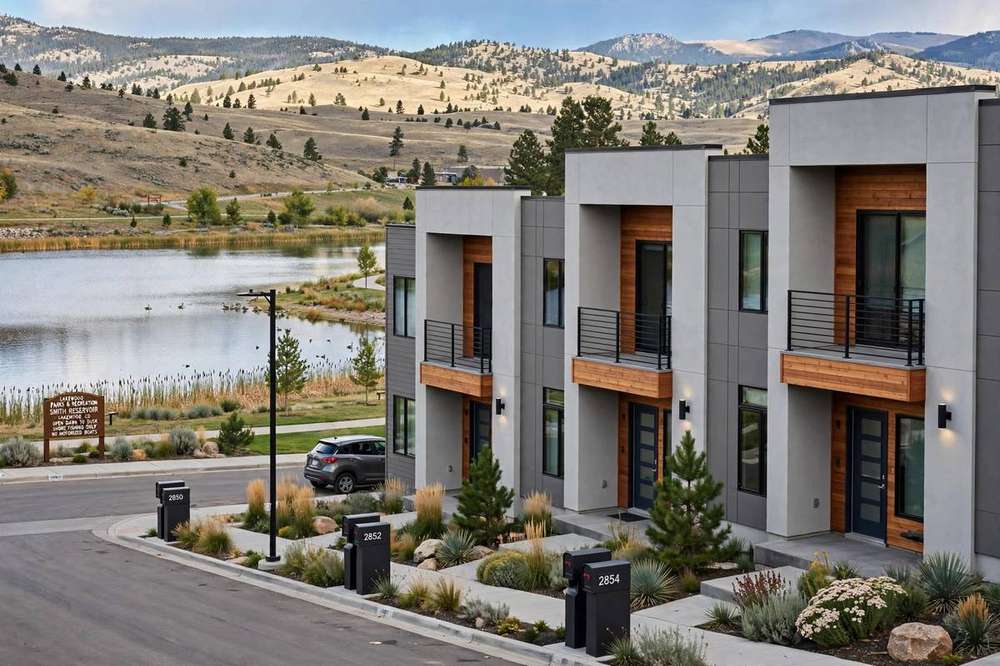
Thraemoor began as farmland and a cluster of summer cabins before it became subdivisions, and that history is still visible in the pipes. A single cul-de-sac can hold a converted cabin-era home with piecemeal plumbing, a 1970s split-level with clay laterals, and a 2000s townhome with PEX, and the waterfront homes on Ward Reservoir Number 1 add sump and high-water-table exposure on top. Thraemoor is the widest pipe-era mix on one street in Lakewood, so the work here starts with identifying what is actually in the walls, not with assuming the era. We are open 24 hours, every day, at (720) 909-6690.
Useful updates and clear timing once a visit is booked.
Review the approach before deciding, with the work explained in plain terms.
Equipped vehicles and respectful cleanup.
Neighbors serving neighbors with follow-through.
Thraemoor sits in south Lakewood, around West Jewell Avenue, South Wadsworth Boulevard and West Yale Avenue, near Ward Reservoir Number 1 and the Bear Creek Greenbelt, bordering the Green Gables area. The name comes from Gaelic for house on a sunny hill, and the area was once farmland and a cluster of summer cabins. The housing is subdivisions of extended ranch-style homes and split-levels on cul-de-sacs from the 1960s to the 1980s, Tudor-inspired Lakewood Estates, newer Green Gables townhouses and Craftsman homes with stone accents, the Thraemoor Estates luxury enclave, and Thraemoor in the Park townhomes with a median year built of 2007. A 1962 round house and 1973 builds are documented in listings. The core 1960s-70s stock typically has copper supply lines, cast-iron or ABS drains and clay tile laterals from before 1975, the 1980s phases and remodels fall in the polybutylene window of 1978 to 1995, and 2000s and later infill is PEX or copper with PVC. The summer-cabin origins mean some of the oldest structures may have had piecemeal plumbing upgrades, so the material has to be checked per house rather than assumed from the era. Note: Census and Point2Homes group the area as Charterwood-Thraemoor, but Charterwood is a Census grouping, not a City neighborhood, and we do not publish it as one.
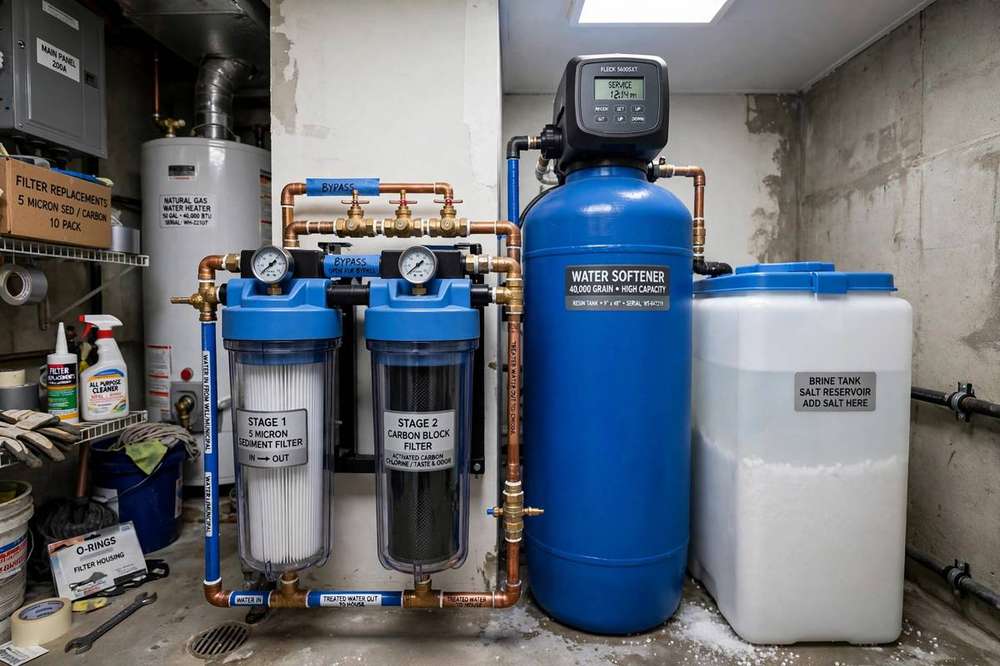
Thraemoor began as farmland and a cluster of summer cabins before it became subdivisions, so one cul-de-sac can hold a converted cabin-era home, a 1970s split-level and a newer townhome side by side. The work here starts with identifying what pipe is actually in the house, because the era decides the job.
On a mixed-era street the camera matters most, because the lateral under a 1970s split-level and the lateral under a newer townhome are not the same pipe. What the camera shows, roots, a break, a belly, a bad joint, decides the repair on a mixed-era street.
View service →02A waterfront home on Ward Reservoir Number 1, or a lower level near the Bear Creek Greenbelt, sits with a high water table, and the sump is not optional there. A pump matched to the inflow, plus a battery backup, handles what the house genuinely sees.
View service →03Supply lines of copper in the 1960s-70s core are now past fifty years old, with cast-iron or ABS drains behind them. Where pressure has faded fixture by fixture, new modern pipe in place of the tired supply runs brings the flow back.
View service →04In a mixed-era house a leak can sit in a run that was never part of the last repair, because a converted cabin-era home can hold galvanized remnants beside a newer copper run. We trace the source with listening gear, a pressure test and a camera, instead of opening a mixed-era wall to hunt.
View service →05A burst pipe, a sewer backup or a heater failure will not wait for business hours, and on a mixed cul-de-sac a failure can be a pipe material no one knew was still in the wall. Call (720) 909-6690 whenever: the team on the phone is the team on the job.
View service →06In a 1970s split-level, slow drains usually mean the main line rather than one fixture, and the main line is usually a clay lateral with roots at the joints. We clear the blockage with a snake, then let hydro jetting scour the wall, which a snake alone cannot do on a mixed-era line.
View service →07A tank heater in a 1960s-80s ranch or split-level is often several replacements on from the original, and the venting and the sizing have to fit the house. Installation follows the code, the permit gets pulled where Lakewood requires one, and the old tank goes with us.
View service →08The 1980s phases and remodels here fall in the polybutylene window, and the irrigation and common-area systems around the townhomes need assemblies that get tested every year. We test backflow assemblies, file the result with the water provider, and repair or replace any assembly that fails.
View service →09High-pressure water takes grease, scale and roots off the inside of a drain or sewer line. Afterwards a camera pass proves the line is genuinely clean, which is worth doing on a mixed-era street, since a line can look clear at the cleanout and still hold a belly further down.
View service →The house decides the job here, not the street, because Thraemoor holds the widest pipe-era mix on one street in the batch. A converted cabin-era home can hold galvanized remnants beside a newer copper run, a 1970s split-level can carry clay laterals, and a 1980s phase can carry polybutylene, so the first step on any visit is to identify what pipe is actually in the house. Under Municipal Code Chapter 14.05, Lakewood adopted the 2021 International Plumbing Code, with the Colorado Plumbing Code underneath it, and that is the standard the work is built to. A Lakewood permit is needed for a water heater replacement, a service line, fixture installs, gas piping, drain and sewer repairs, a sewer replacement, and a repipe. Under Resolution R-2025-69, in effect since 1 January 2026, fees follow valuation, so the figure depends on the job. The Lakewood Permit Counter, on 303-987-7500, is where a fee gets confirmed. On a mixed cul-de-sac we identify the material before quoting the work, because the era decides the job.
A converted cabin-era home can hold more than one pipe material in the same house, and a repair that fixed one material can leave the other leaking. We check the supply runs at the water heater and under the sinks before planning the work, because the material decides the fix.
A waterfront home on Ward Reservoir Number 1, or a lower level near the Bear Creek Greenbelt, sits with a high water table. A sump pump that cannot keep up, or one without a battery backup, fails exactly when the storm cuts the power, so we size the pump and the backup to the inflow the house actually sees.
The 1980s phases and remodels fall in the 1978-1995 polybutylene window, so the check is for grey PB2110 pipe at water-heater connections and under-sink shutoffs. A finding there changes the plan for the whole house, not just the fixture in front of us.
The 2021 IPC came into Lakewood Municipal Code Chapter 14.05 by Ordinance O-2023-16. Residential work in the ranch, split-level and townhome stock here follows Chapters 25-33 of the 2021 IRC.
Resolution R-2025-69, effective 1 January 2026, sets permit fees from a valuation schedule, by the value of the job. The Lakewood Permit Counter on 303-987-7500 is the place to confirm the figure before permitted work starts.
Thraemoor is the only neighborhood in this batch that began as farmland and a cluster of summer cabins before becoming subdivisions, so the angle is per-house pipe identification in a mixed-era neighborhood, not a single-era repipe story.
A converted cabin-era home can hold piecemeal plumbing, with galvanized remnants beside a newer copper run and a repair history that covers only part of the house. If a repair fixed one material and the leak is still there, the other material is the place to look.
A 1970s split-level typically has a clay lateral, with roots entering at the joints. A camera shows the roots and the joint, then the fix follows what the camera found, whether that is a clearing, a spot repair or a replacement.
The 1980s phases and remodels fall in the 1978-1995 polybutylene window, so the check is for grey PB2110 pipe at water-heater connections and under-sink shutoffs. A finding there changes the plan for the whole house.
A waterfront home on Ward Reservoir Number 1 sits with a high water table, and a lower level near the Bear Creek Greenbelt takes on water in spring snowmelt and summer storms. A sump pump that cannot keep up, or one without a battery backup, fails exactly when the storm cuts the power.
Thraemoor is navigated by its reservoir and its avenues. Ward Reservoir Number 1 is the water landmark, Jewell Avenue, Wadsworth Boulevard and Yale Avenue are the roads, and the Bear Creek Greenbelt is the corridor along the edge. We use the reservoir to place the waterfront homes and the avenues to place the rest.
Ward Reservoir Number 1 is the water landmark for the neighborhood, and some newer homes sit directly on it. Those homes have the sump and high-water-table exposure.
The Bear Creek Greenbelt corridor runs along the edge of the neighborhood, and the lowest homes near it sit near surface water.
West Jewell Avenue is the northern route through the neighborhood and the way in from the east.
South Wadsworth Boulevard is the north-south spine for south Lakewood and the way in from the north.
Green Gables borders the neighborhood, and its newer townhouses and Craftsman homes with stone accents are the newer half of the area's housing.
We serve Thraemoor across its cul-de-sacs, from the converted cabin-era homes to the 1970s split-levels and the 2000s townhomes, and from the Ward Reservoir waterfront to the Green Gables edge. The areas below are the parts of the neighborhood and the nearby south-Lakewood neighborhoods we work in most.
Kendrick Lake is the next neighborhood over, with 1960s-70s split-levels on sloped ground around the reservoirs, and its lower-level drainage is the same work as Thraemoor's waterfront.
Lasley is south Lakewood's oldest stock, with a 1940s-50s core of galvanized and clay beside a 2000 White Fence Farm infill.
Carmody pairs 1970s split-levels with a western horse fringe, so its lower-level bathrooms and barn hydrants are a useful comparison for Thraemoor's split-levels.
Bear Creek pairs 1960s-70s homes with creekside below-grade work, and its sump and backwater-valve jobs are a close cousin to Thraemoor's waterfront drainage.
The jobs below are the patterns that come up most often on these mixed cul-de-sacs, described as typical calls rather than one specific visit. The cabin-era home, the split-level and the townhome sit side by side, and the three jobs show how different the work can be on one street.
On a mixed cul-de-sac the first step is to identify what pipe is actually in the house, because a converted cabin-era home can hold more than one material. We check the supply runs at the water heater and under the sinks, then plan the work from what is there rather than from the decade the house was built.
Roots can sit at several joints in a lateral under a 1970s split-level. The camera shows the joints and the damage. Once the roots are cleared, the footage decides between a spot repair and a replacement.
A waterfront lower level on Ward Reservoir Number 1 takes on water in spring snowmelt, when the water table is high. The work is usually a sump pump and battery backup sized to the inflow, with the discharge run checked so the water does not come straight back.
Awesome service
great service
Very impressed did a great job
The year here follows the reservoir and the mix of eras. Spring melt lifts the waterfront, summer opens the window for the heavy work, the fall freeze finds the exposed runs, and winter is when the oldest pipe gives up.
In spring, snowmelt lifts the water table around Ward Reservoir Number 1 and the waterfront lower levels take on water first, while roots start growing into clay lateral joints. A slow drain checked by camera in spring catches root intrusion before a backup forms.
With the ground workable and the mixed cul-de-sacs dry, summer is the window for repiping and sewer work. The water heater gets flushed and the tankless unit descaled here too, after a winter of hard use.
Between late October and mid-November the first hard freeze usually arrives, and the exposed runs on a cabin-era home feel it first. A line that froze once will freeze again unless it is drained, insulated or rerouted.
The peak season for frozen pipes and water heater failures is winter. February 2021 shows how cold it gets: a high of 1F and a low of -14F on 14 February. On a mixed street the oldest pipe freezes first.
Thraemoor sits in south Lakewood, and the neighborhoods below are the ones around it. If you are in one of them, the same reservoir and mixed-era issues usually apply.
A mixed-era cul-de-sac asks different questions on every lot. Five are worth asking, and each answer should name the house, its pipe and its decade.
The work should be laid out in plain words, starting with what pipe is actually in the house. A plan that assumes the era from the decade the house was built is not a plan for this street.
On a mixed cul-de-sac the footage counts most, because the lateral under a 1970s split-level and the lateral under a newer townhome are not the same pipe. Ask for the findings: camera footage, a pressure reading, or the failed part on the bench.
A repipe or a lateral replacement on a mixed-era street is where the permit question comes up first. Sewer and repipe work, a water heater replacement, gas piping and a service line usually need a permit in Lakewood. Ask who sorts it and what it covers.
Before the visit, clear the way to the fixture, the water heater and the cleanout. In a mixed-era house it helps to know whether the cleanout sits in the basement or out in the yard, and the shutoff is worth finding first.
Follow-up questions go to the same number, (720) 909-6690, answered around the clock.
The 2021 International Plumbing Code is the code Lakewood adopted, in Chapter 14.05 of the Lakewood Municipal Code, Ordinance O-2023-16, with the Colorado Plumbing Code below it. On a mixed-era street the code covers the repipe, lateral and polybutylene work that comes up most often.
For the big jobs, a permit is needed, and in Thraemoor that usually means a water heater replacement, a service line, gas piping, or sewer and repipe work on a mixed-era house. We confirm which jobs need one before any work is agreed.
Resolution R-2025-69, effective 1 January 2026, makes Lakewood's permit fees valuation-based, so no flat figure applies. Call the Lakewood Permit Counter, 303-987-7500, to confirm the fee for a given job.
Ranch, split-level and townhome stock on these mixed cul-de-sacs falls under Chapters 25-33 of the 2021 International Residential Code for its residential plumbing work.
Once a year, the testable backflow assemblies get tested by a certified tester, and the results go to the water provider. Irrigation systems are the most common residential trigger, and the provider follows the address here, in the Bancroft-Clover and Bear Creek district area of south Lakewood.
For pre-1951 homes, Denver Water's Lead Reduction Program applies, and no Lakewood-only lead-line count exists. Screening runs address by address. The 1960s-80s stock here postdates 1951, so the lead check comes up less often here than in the prewar neighborhoods, and it still runs by address.
Smell gas? Get out first, then call 911 or Xcel Energy before calling a plumber. Do not remain inside investigating a suspected leak.
Because it began as farmland and a cluster of summer cabins before becoming subdivisions. A single cul-de-sac can hold a converted cabin-era home with piecemeal plumbing and possible galvanized remnants, a 1970s split-level with clay laterals, and a 2000s townhome with PEX, plus waterfront homes on Ward Reservoir Number 1 with sump and high-water-table exposure.
The core 1960s-70s stock typically has copper supply lines, cast-iron or ABS drains and clay tile laterals from before 1975. The 1980s phases and remodels fall in the polybutylene window of 1978 to 1995. The 2000s and later infill is PEX or copper with PVC. The summer-cabin origins mean some of the oldest structures may have had piecemeal upgrades, so the material is checked per house.
Charterwood is a Census grouping, not a City neighborhood. Census and Point2Homes group the area as Charterwood-Thraemoor, but we do not publish Charterwood as a neighborhood.
Yes. Some newer homes sit directly on Ward Reservoir Number 1, and the lowest homes near the reservoir and the Bear Creek Greenbelt corridor sit near surface water. A sump pump and a battery backup matter there, because a failed pump means water on the floor of a finished lower level.
Yes. We are open 24 hours, every day, and the phone number is (720) 909-6690. A burst pipe, a sewer backup or a flooded lower level is an emergency call at any hour.
Not seeing your question? Our local team can help you understand urgency, scheduling and what to expect.
Ask the local teamCall (720) 909-6690 any hour. We are open 24 hours, every day, for Thraemoor's cabin-era homes, split-levels and waterfront townhomes alike.