Open 24 hours
Call any hour, any day — the phone is answered around the clock.
Trenchless sewer repair in Lakewood, CO fixes a damaged sewer line from two small access pits instead of an open trench across your lot. Pipe lining (CIPP) builds a new pipe inside the old one; pipe bursting pulls a new jointless pipe through while breaking the old pipe apart. Both protect driveways, patios, xeriscape, and mature trees — but neither fits every line. The camera decides, and this page explains how.
Call any hour, any day — the phone is answered around the clock.
We explain what we found and what the options are before work starts.
Equipped vehicles and a clean job site when we leave.
A Lakewood business at 200 Union Blvd — neighbors serving neighbors.
A trenchless job is a method, not a shortcut: the same camera, cleaning, and inspection discipline as an open-cut job, with far less digging. Here is what it covers.
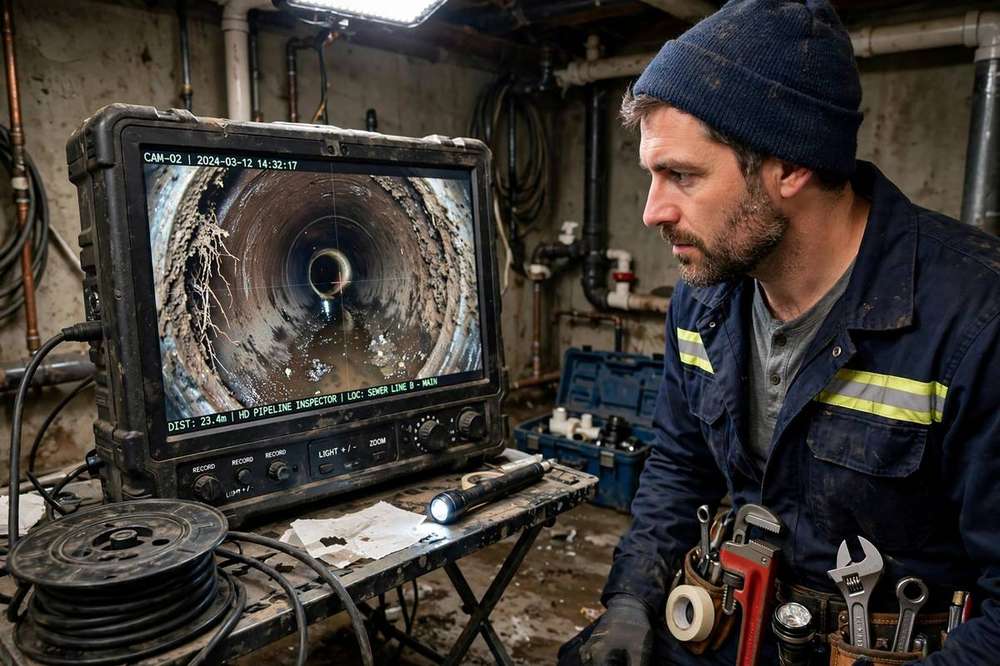
A full camera run from the cleanout to the main, recorded so we can see whether the line still holds its shape and slope — the condition lining needs.
The line is jetted clean before lining, because the liner bonds only to clean pipe. Roots, grease, and scale are cleared first.
A resin-saturated liner is installed inside the old pipe and cured in place, forming a new jointless pipe within the host pipe.
Where lining does not fit, a bursting head pulls new jointless pipe through the old line, breaking the host pipe apart as it goes.
Sewer work needs a City of Lakewood plumbing permit, and work under a sidewalk or street needs a right-of-way permit. Confirm both with the Permit Counter at 303-987-7500.
A second camera run confirms the liner or new pipe is continuous, at grade, and open at every connection before the pits are closed.
Call (720) 909-6690 — open 24 hours, every day — and tell us what is happening.
Trenchless repair fixes a sewer line through small access pits — usually one at the house and one near the main — instead of excavating the whole run.
Lakewood is a strong case for trenchless work. Deep frost, rocky and expansive bentonite clay soil, and a short working season make open trenching expensive and disruptive, and many Lakewood lots carry mature landscaping, xeriscape beds, driveways, and patios over the lateral. A trenchless job leaves all of that in place. But the method has limits, and an honest page has to state them: lining works when the old pipe still holds its shape and slope — cracked pipe, root intrusion at joints, and offset joints are good candidates. It does not work when the pipe has collapsed, when a long belly holds standing water, or when there is nothing sound for the liner to bond to. Those lines need sewer line replacement, usually open-cut, and we say so before you spend anything on a lining attempt.
The two methods do different jobs. CIPP lining keeps the old pipe as a host and builds a smooth new pipe inside it, which slightly narrows the bore but seals every crack and joint against roots. Pipe bursting replaces the line entirely with new jointless pipe and can even upsize it, but it needs a host pipe that can be broken apart and enough room for the pulling equipment. Which one fits your line depends on the camera footage, the pipe material — clay tile, cast iron, Orangeburg, or PVC all behave differently — and the depth and slope of the run. A sewer camera inspection answers all three questions before any commitment.
We run the sewer camera from the cleanout to the main and record the footage. The question is specific: does this line still hold its shape and slope, or has it collapsed or bellied?
The line is jetted clean. Lining resin bonds only to clean pipe, and a clean run also shows the true condition of every joint on the second camera pass.
We talk through what the camera showed and which method fits — lining for a sound host pipe, bursting where the line needs replacing, open-cut where neither fits.
The plumbing permit is arranged and utility locates are called in before any digging. Even two small pits need marked utilities.
The liner is installed and cured, or the new pipe is pulled through. A final camera run confirms the finished line is continuous and at grade before we close the pits.
Records the full run so we can judge whether the line can host a liner, needs bursting, or needs open-cut replacement.
Clears roots, grease, and scale at high pressure — the required pre-clean before lining, and the proof pass afterwards.
Marks depth and path so the access pits land exactly on the line and buried utilities stay protected.
Installs and cures the resin liner inside the host pipe, forming a new jointless pipe within the old one.
Pulls new jointless pipe through the old line while breaking the host pipe apart, for lines that need full replacement.
Confirms flow after the work and handles smaller blockages found during the camera run.
The clay lateral is cracked but still holds its shape and slope, so lining fits: the liner seals every joint against roots, the long run under mature trees stays untouched, and no concrete is broken.
Open-cut would mean removing the patio. The camera shows the pipe is sound enough to burst, so a new jointless pipe is pulled through from two small pits and the patio never moves.
Trenchless does not fit here — a collapsed pipe has nothing for a liner to bond to and nothing to pull through. The honest answer is open-cut replacement of that section, and we say so up front.
Trenchless repair fixes a sewer line from two small access pits instead of an open trench across the lot. Pipe lining builds a new pipe inside the old one; pipe bursting pulls a new jointless pipe through while breaking the old pipe apart. Both protect driveways, patios, xeriscape, and mature trees — but neither fits every line. The host pipe has to be sound enough to carry the method, the grade has to be right, and the connection at the main has to hold. The camera decides, and the neighborhoods below are where the method fits — and where it does not.
1959–67 ranches with long laterals under mature-tree lots. The classic trenchless candidate: a sound host pipe under a driveway and lawn worth keeping.
1980s–90s core with copper and PVC — lining is rarely needed here. The trenchless work is on the 1960s foothill-edge homes with clay laterals.
A planned community with a master HOA and three jurisdictions. Exterior access and common areas need HOA approval before pits are opened.
1980s condos and apartments with shared stacks and HOA common lines. Trenchless work here is at building scale, not one house at a time.
A resin liner is inverted into the host pipe and cured in place, forming a new jointless pipe inside the old one. The host pipe must hold its shape.
A bursting head breaks the old pipe apart while pulling a new jointless pipe through. It needs a host pipe that can be broken and a clear path.
The camera run before any trenchless work checks that the host pipe can carry the method. A collapsed line cannot host either one.
Two small pits — one at the house, one near the main — instead of a trench. Spoil is hauled away and the pits are restored when the pull is done.
A collapsed line, a long belly, or a connection at the main that needs rebuilding disqualifies trenchless. Those need open-cut work.
Before: a 1960s ranch has root intrusion at every joint and the line needs clearing every few months.
After: a cured-in-place liner seals every joint, the camera passes at final, and the yard, trees, and driveway are untouched.
Maintenance: Keep trees trimmed back from the line and have the camera run again if drains slow — the liner is jointless, but the rest of the system still ages.
Before: a failing line runs under a new patio, and open-cut would mean removing it.
After: new jointless pipe is pulled through from two small pits, the patio never moves, and the camera confirms the finished line.
Maintenance: Mark the access pits on your property sketch for future work.
Before: a homeowner expects a no-dig fix, but the camera shows a collapsed section with standing water.
After: we explain why lining cannot bond to a collapsed pipe and quote open-cut replacement of that section instead.
Maintenance: A failed lining attempt would have cost the same as the repair it was meant to avoid — the camera first saved that spend.
Trenchless methods answer a specific set of problems. When your problem is on this list and the camera agrees, no digging is needed. When it is not, we say so.
Roots enter through hairline cracks in clay tile. Lining seals every joint from the inside, so the entry points are gone without digging up the yard.
A cracked but structurally sound line is the ideal lining candidate — the liner becomes the new pipe and the host becomes the form.
Joints shifted by clay soil let roots and soil in. Lining bridges the offsets with a smooth, continuous bore.
Driveways, patios, and xeriscape over the lateral stay in place when the work happens through two small pits.
Lining cannot fix these — a collapsed pipe has nothing to bond to, and a belly holds water that a liner follows. These need open-cut replacement.
Trenchless work rewards judgment more than equipment. The expensive mistake is lining a line that cannot hold a liner, and the way to avoid it is a careful camera read before anything is sold.
Emergency Plumber Lakewood holds a 5.0-star rating from 9 Google reviews. Homeowners across Lakewood call us when a main line fails, a water heater quits, or a drain will not clear — and the reviews describe the same things we aim for on every visit: a clear explanation of what is wrong, the options before work starts, and a clean job site when we leave. Call (720) 909-6690 — open 24 hours, every day — to talk through what is happening at your home.
It depends on the camera footage. Lining fits when the old pipe still holds its shape and slope — cracked pipe, root intrusion, and offset joints. It does not fit a collapsed pipe or a long belly. The camera inspection answers the question before you commit to either method.
Lining (CIPP) builds a new pipe inside the old one, sealing cracks and joints. Bursting pulls a brand-new jointless pipe through while breaking the old pipe apart, and can upsize the line. Lining keeps the host pipe as a form; bursting replaces it entirely.
The work happens through two small access pits, usually at the house and near the main, so lawns, driveways, patios, and xeriscape stay in place. Open-cut replacement is the alternative when the line cannot host a trenchless method.
Yes. Sewer work needs a City of Lakewood plumbing permit, and work under a sidewalk or street needs a right-of-way permit as well. Permit fees are valuation-based, so confirm the fee with the Lakewood Permit Counter at 303-987-7500.
Not seeing your question? Call (720) 909-6690 — open 24 hours, every day — and talk it through with the local team.
Ask the local teamReach us any hour at (720) 909-6690. Tell us what the drains are doing, or what the camera already showed, and we will talk through the next step.