Open 24 hours
Call any hour, any day — the phone is answered around the clock.
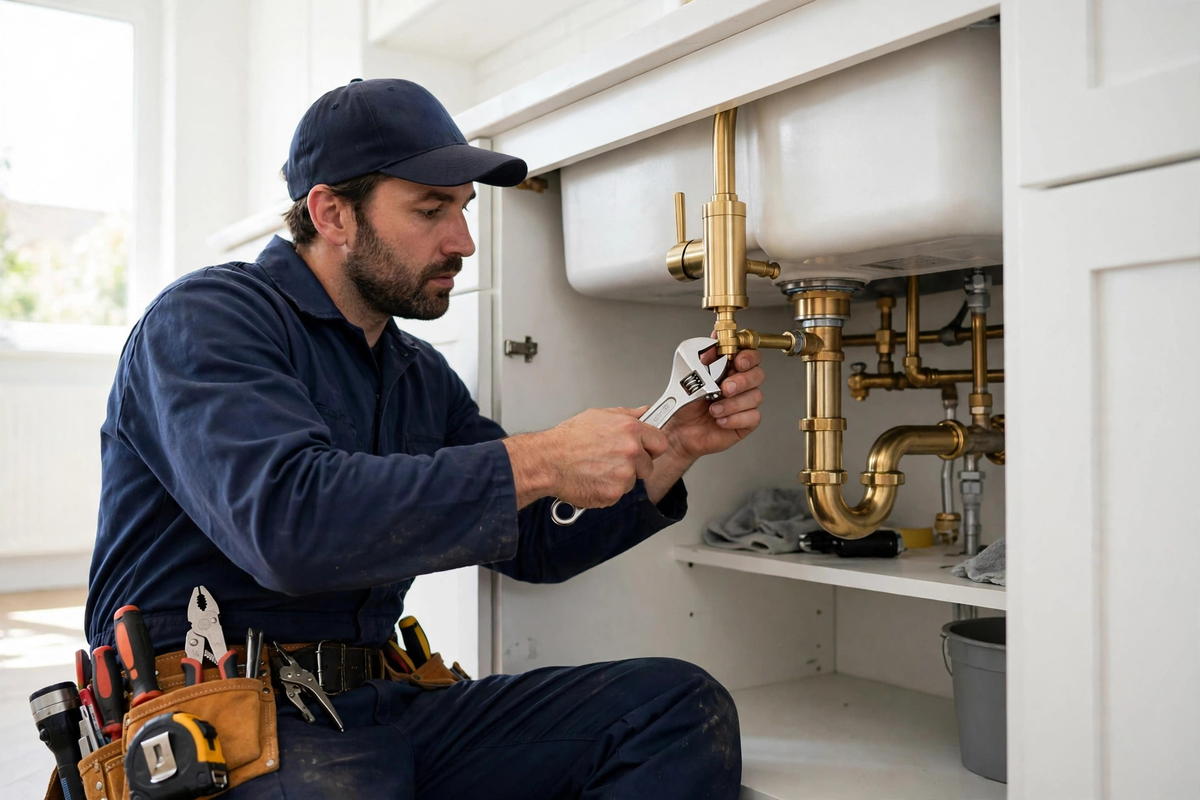
Plumbing fixture installation in Lakewood, CO covers the fixtures you touch every day: faucets, toilets, showers, bathtubs, and sinks — installed new, replaced when they fail, and repaired when a repair is the honest answer. This is one page for all five, because a Lakewood bathroom or kitchen job usually involves several of them at once, and splitting them into five thin pages would hide that. Each fixture gets its own section below.
Call any hour, any day — the phone is answered around the clock.
We explain what we found and what the options are before work starts.
Equipped vehicles and a clean job site when we leave.
A Lakewood business at 200 Union Blvd — neighbors serving neighbors.
A fixture job is a fit, a connection, and a test — and the shut-off that makes the next repair easy. Here is what the work covers.
Kitchen and bathroom faucets: new installs, replacements for leaking or scaled valves, and cartridge and seal repairs where a repair holds.
New toilets, replacements for cracked or constantly running units, and repairs to fill valves, flappers, and seals.
Shower valves, heads, and trim: new installs, replacements for scaled or leaking valves, and repairs that stop a shower that will not shut off.
Bathtub faucets, drains, and overflow assemblies — installed, replaced, and repaired, including the drain work underneath.
Kitchen and bathroom sinks: new installs and replacements, with the drain and supply connections fitted and tested.
A working shut-off at every fixture, so the next repair isolates one tap instead of the whole house.
Call (720) 909-6690 — open 24 hours, every day — and tell us what is happening.
A fixture is the point where your water system meets your hands — and in Lakewood's 1960s and 70s homes, the fixtures are often as old as the pipe behind them. If a faucet is dripping rather than broken, our guide on how to fix a dripping faucet in your Lakewood home covers the shut-off, the part that usually fails, and when the drip means replacing the faucet.
Mineral scale shortens fixture life here. Lakewood water is moderately hard — around 105 mg/L, about 6.1 grains per gallon — and scale builds up inside faucet cartridges, shower valves, and toilet fill valves until they drip, stick, or run constantly. A faucet that drips, a toilet that runs, a shower that will not shut off, and a sink that drains slowly are usually the same story: a fixture at the end of its service life, fed by supply lines of the same era. The repair-or-replace question is answered fixture by fixture: a cartridge or a fill valve is a repair; a cracked toilet, a scaled-shut shower valve, or a faucet whose finish has failed is a replacement. Our garbage disposal installation page covers the kitchen fixture that pairs most often with a sink job.
One thing we do not claim on this page is a permit shortcut. A like-for-like fixture swap's permit status is unverified, so we do not state that swaps are permit-exempt — fixture installs are among the works Lakewood's permit rules cover, and the position is confirmed with the Lakewood Permit Counter at 303-987-7500 before the job is planned. What we do on every fixture job is the same: shut the water off at the fixture or the house, fit the new fixture to the existing supply and drain, test every connection under pressure, and leave a working shut-off behind. If the supply lines behind the fixture are galvanized and failing, the honest conversation is a whole-house repipe — a new faucet on a dying supply line is a short-lived fix.
We check what is failing — the fixture, the valve, or the supply line behind it — because a new fixture on a dying line is a short-lived fix.
Water is shut off at the fixture or the house, the old fixture is removed, and the supply and drain connections are inspected.
The new fixture is fitted to the existing supply and drain, with new seals and a working shut-off valve at the fixture.
Every connection is tested under pressure, the drain is run, and the fixture is worked through its full range.
We show you the shut-off, the new fixture's operation, and what to watch — a drip in the first days is a call back, not a wait-and-see.
Reach the nuts and connections behind sinks and tubs without damaging the fixture or the finish.
New supply lines and shut-off valves on the truck, so a fixture job does not stop for a parts run.
The right seal for the fixture and the surface — a sink seal and a toilet seal are different jobs.
For the drain work underneath a sink or tub, which is part of the fixture job, not a separate call.
A hardness check at your address, because scale is the reason the old fixture failed and the new one needs protecting.
Confirms the supply line behind the fixture is sound before the new fixture depends on it.
The fixtures are the same age as the supply lines, and scale has finished all three. One visit replaces the set, with new shut-offs at each fixture, and the supply lines are checked while the walls are open.
The faucet cartridge is scaled shut and the drain needs clearing — two problems, one visit. The disposal is checked too, since a jammed disposal and a slow drain are often the same call.
The shower valve is scaled and worn. A cartridge repair is tried first; if the valve body is the problem, the valve is replaced — and the decision is made with the wall open, not guessed.
Lakewood's fixtures age with its houses. The 1960s and 70s bathrooms and kitchens across Eiber, Applewood, Morse Park, and Carmody carry original or early-replacement fixtures, and moderately hard water has been scaling their cartridges and valves for decades. The 2021 International Plumbing Code adopted by Lakewood governs fixture installs, and the permit position is confirmed with the Permit Counter before the job is planned.
Pre-war through 1960s homes where a bathroom set — faucet, toilet, shower valve — often fails together.
1960s ranches where kitchen faucets and sinks are the most common fixture calls.
Mid-century bathrooms where a running toilet and a dripping faucet are the same visit.
1970s split-levels where lower-level bathrooms add drain work to the fixture job.
Older homes beside newer infill, where the fixture era decides repair vs replacement.
Around 105 mg/L, about 6.1 grains per gallon — scale builds inside cartridges and valves.
Original and early-replacement fixtures reaching the end of their service life together.
Cartridges and fill valves that drip, stick, or run constantly are usually scaled, not broken.
A new fixture on a failing galvanized supply line is a short-lived fix — the line is checked first.
Before: a 1960s bathroom has a dripping faucet, a running toilet, and a shower valve that will not shut off.
After: the set is replaced in one visit, with new shut-offs at each fixture, and the supply lines are checked while the work is open.
Maintenance: Work each new fixture through its full range in the first days. A drip early is a call back, not a wait-and-see.
Before: a kitchen sink drains slowly and the faucet drips, and the disposal hums without turning.
After: the faucet cartridge is replaced, the drain is cleared, and the disposal is checked — two problems, one visit.
Maintenance: Keep grease out of the drain. Scale and grease are what finished the old faucet and the old drain.
Before: a shower will not shut off, and the homeowner expects a wall opened and a valve replaced.
After: the cartridge is the failure, not the valve body, and a cartridge repair restores the shower without opening the wall.
Maintenance: A repair is the honest answer when the valve body is sound — the wall stays closed.
Five fixtures, one page, and the same question for each: repair or replace? Here is how each one usually answers it.
Scale builds inside the cartridge until the faucet drips or the handle sticks. A cartridge repair holds when the body is sound; a failed finish or body means replacement.
A running toilet is usually a fill valve or flapper — a repair. A cracked bowl or tank, or a toilet that rocks on a failed flange, is a replacement.
A shower valve scaled or worn past its seals. The cartridge is tried first; the valve body decides whether replacement follows.
A tub drain or overflow assembly clogged with hair and scale, or a drain line that needs clearing. The fixture and the drain are checked together.
A leaking trap, a failed seal, or a supply connection that has worked loose. The drain and supply are both tested under pressure after the fix.
Fixture work looks simple and punishes shortcuts: a seal that is wrong for the surface, a supply line reused past its life, a shut-off left seized. The details are the job.
Emergency Plumber Lakewood holds a 5.0-star rating from 9 Google reviews. Homeowners across Lakewood call us when a main line fails, a water heater quits, or a drain will not clear — and the reviews describe the same things we aim for on every visit: a clear explanation of what is wrong, the options before work starts, and a clean job site when we leave. Call (720) 909-6690 — open 24 hours, every day — to talk through what is happening at your home.
It depends on the faucet. A scaled or worn cartridge is a repair when the faucet body and finish are sound. A failed finish, a cracked body, or a faucet whose parts are no longer available means replacement. We judge it with the faucet open, not over the phone.
Usually the fill valve or the flapper — both are repairs. A toilet that runs because the bowl or tank is cracked, or because it rocks on a failed flange, is a replacement. A running toilet wastes water every hour it runs, so it is worth a visit, not a wait.
The permit status of a like-for-like fixture swap is unverified, so we do not claim swaps are permit-exempt. Fixture installs are among the works Lakewood's permit rules cover, and the position is confirmed with the Lakewood Permit Counter at 303-987-7500 before the job is planned.
Yes — and it is usually the sensible way to do it. Fixtures in a 1960s or 70s bathroom are the same age and fail together, so a faucet, toilet, and shower valve are often one visit with new shut-offs at each fixture.
Not seeing your question? Call (720) 909-6690 — open 24 hours, every day — and talk it through with the local team.
Ask the local teamReach us any hour at (720) 909-6690. Tell us which fixtures are failing and how old the house is, and we will talk through repair or replacement.