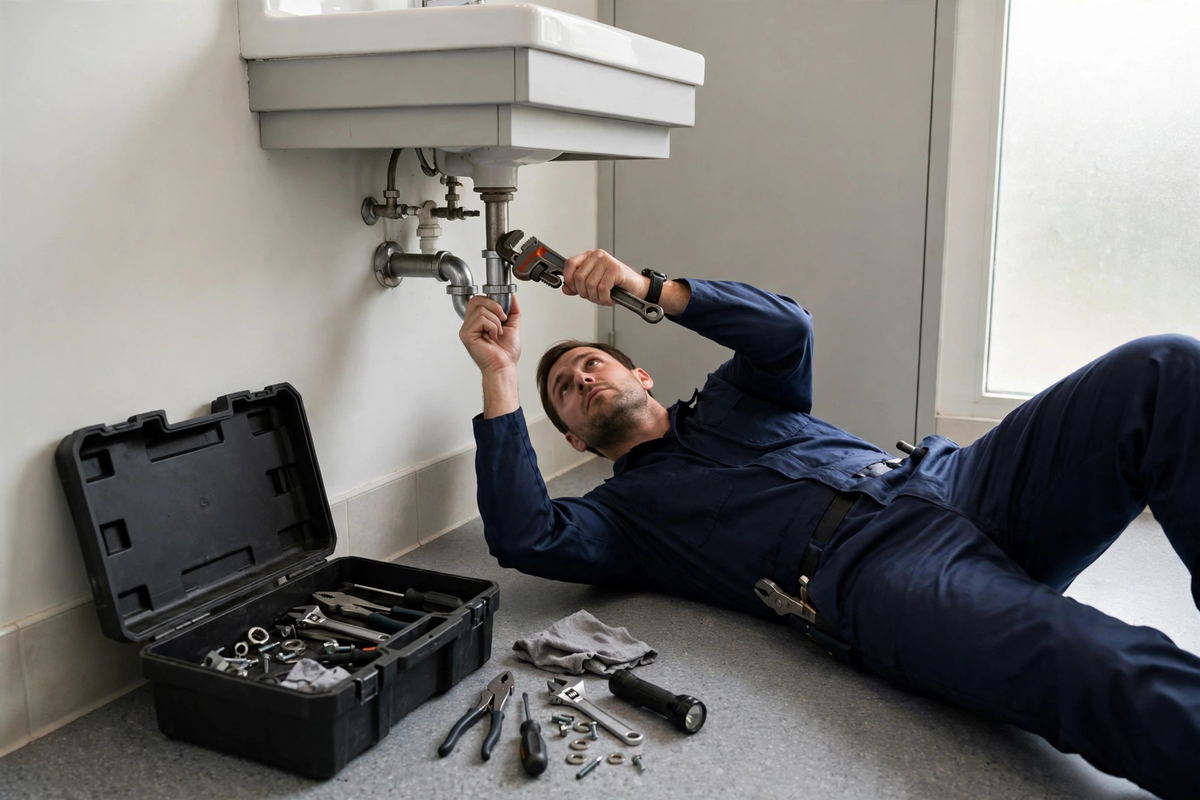
Why does my water heater run out of hot water so fast?
Hot water that runs out halfway through a shower is usually a tank that is too small, sediment cutting into capacity, or a part that has failed. Here is how to tell which one it is in a Lakewood home.
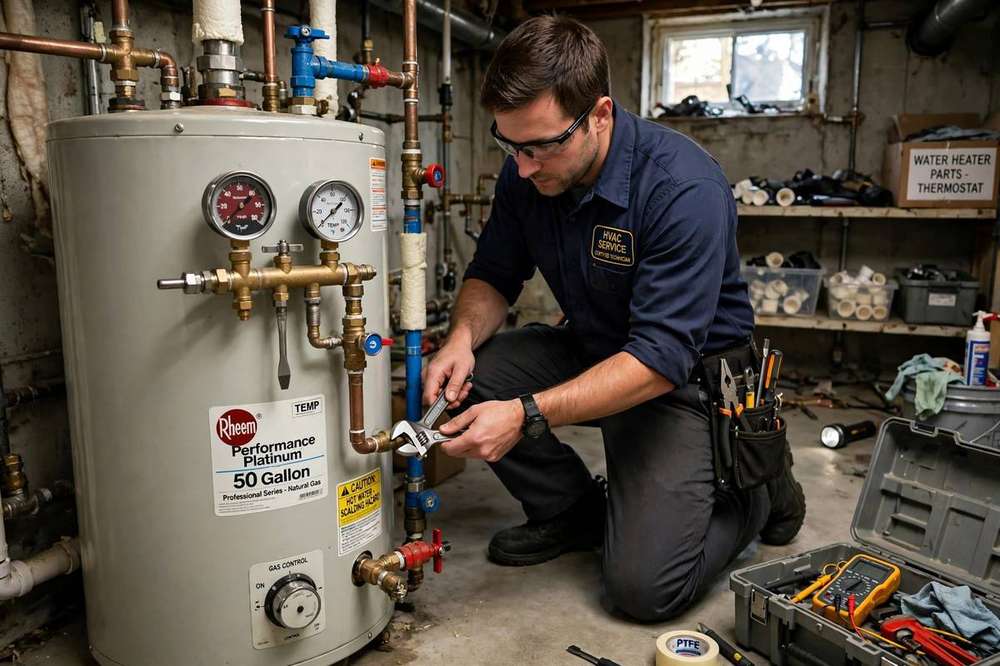
A water heater that runs out of hot water fast is one of the most common complaints we hear in Lakewood, and it has a short list of causes. The tank may be too small for the household, sediment may have built up inside it, a part may have failed, or the household's hot-water demand may have grown past what the unit was sized for. The fix depends on which one it is, and the symptoms point to the answer. This guide walks through the causes in the order a plumber checks them.
The tank may be too small for the household
The simplest cause is also the easiest to overlook. A water heater is sized for a household, and households change. A tank that was adequate for two people runs short when the household grows, when a bathroom is added, or when a soaker tub or a large showerhead is installed. A standard shower uses a steady flow of hot water, and a tank holds a fixed amount. Once the hot water in the tank is used, the heater needs time to recover, and the water at the tap turns lukewarm and then cold. If hot water runs out at roughly the same point every day, and the pattern started when the household changed, the tank is probably undersized rather than broken. The answer is a larger tank or a tankless unit, and a plumber can size either one for the household's actual demand. Our water heater replacement page covers sizing and replacement.
Sediment and scale cut into capacity
Lakewood's water is soft to moderately hard, averaging around 105 milligrams per liter of hardness, about 6.1 grains per gallon, for Denver Water customers. That is not extreme, but over years the minerals in the water settle as sediment at the bottom of a tank water heater. Sediment takes up space that hot water used to occupy, and it insulates the water from the burner or the heating element, so the unit heats more slowly and recovers more slowly. The signs are hot water that runs out sooner than it used to, rumbling or popping noises from the tank as water trapped under the sediment boils, and a recovery time that has grown longer over the years. Flushing sediment from a tank is a routine maintenance job, and it is one of the first things a plumber does when a tank is underperforming. If the sediment has hardened into a thick layer, flushing may not remove it all, and the tank may be near the end of its service life.
Altitude affects gas water heaters
Lakewood sits at about 5,518 feet above sea level, and altitude affects gas appliances. Gas burners lose output with altitude, roughly about four percent per thousand feet above two thousand feet, so a gas water heater rated at sea level delivers less heat here. That means a slower recovery time than the rating plate suggests, and a tank that struggles to keep up when demand is high. Altitude derating is not a defect, and it is not something a homeowner can adjust. It is a sizing factor, and it is one reason a tank that seems adequate on paper can run short in a Lakewood home. If your gas water heater has always run short, and the tank and the thermostat check out, altitude may be part of the answer, and a plumber can advise on a unit sized for the elevation.
A failed dip tube or thermostat
Inside a tank water heater, the dip tube carries cold water to the bottom of the tank, so it heats before it rises to the top and out to the taps. When a dip tube cracks or breaks, cold water mixes with the hot water at the top of the tank, and the water at the tap turns lukewarm far sooner than it should. The symptom is distinctive: hot water that starts hot and then fades quickly, even though the tank is not empty. Small plastic particles in the water, or in a faucet aerator, can also point to a failing dip tube. Replacing a dip tube is a plumber's job, because it means opening the tank and working with the water and, on a gas unit, the gas supply.
The thermostat is the other part that can fail quietly. A thermostat set too low gives you less usable hot water, because the tank is holding water at a lower temperature. A thermostat that has failed can leave the water cooler than the setting, or can cause the burner or element to cycle incorrectly. Do not adjust a gas water heater's thermostat or burner yourself, and do not open the gas side of the unit. If you suspect the thermostat, call a plumber and let the unit be tested properly. See our water heater repair page for how a technician diagnoses a tank.
Electric units: a failed heating element
An electric tank water heater has two heating elements, one upper and one lower. If the lower element fails, the unit heats only the top of the tank, and the hot water runs out quickly. The symptom is hot water that lasts for a short shower and then goes cold, with the tank itself not obviously broken. If the upper element fails, the unit may produce no hot water at all. Testing and replacing a heating element involves electrical work inside the unit, and it should be done by a plumber or an electrician, not as a homeowner project. Turn off the power at the breaker before anyone works on the unit, and do not open the access panels yourself.
When repair is enough, and when it is not
A failed dip tube, a worn thermostat, a failed element, or a tank full of sediment can often be repaired, and the repair restores the hot water the household is used to. Replacement makes more sense when the tank itself is leaking, when the tank is old and has needed several repairs, or when the household has outgrown the tank and the problem is size rather than a part. A tank that is leaking from the body cannot be repaired, and it needs to be replaced before the leak damages the floor. A plumber can look at the unit's age, its condition, and the household's demand, and advise on the choice without pressure. If a tankless unit is on the table, our tankless water heater installation page explains how tankless sizing works in Lakewood, including the altitude factor.
If your water heater runs out of hot water sooner than it used to, start by noting the pattern: when it runs out, whether it has always run short or recently got worse, and whether the tank is making noises. That pattern is what a plumber uses to narrow down the cause. Call Emergency Plumber Lakewood at (720) 909-6690 and we will help you work it out. We are open 24 hours, every day.
Get help with plumbing in Lakewood
If you would rather have a plumber take it from here, call Emergency Plumber Lakewood at (720) 909-6690. We serve homes across Lakewood, and we are open 24 hours, every day.
Questions before you call
Why does my water heater run out of hot water so fast?
The usual causes are a tank that is too small for the household, sediment cutting into capacity, a failed dip tube that mixes cold water with hot, a faulty thermostat, or a failed lower heating element on an electric unit. Altitude also slows recovery for gas heaters in Lakewood.
Does sediment make a water heater run out of hot water?
Yes. Sediment settles at the bottom of the tank, takes up space that hot water used to occupy, and insulates the water from the burner or element. The unit heats more slowly and recovers more slowly. Flushing the tank is routine maintenance.
What is a dip tube and how do I know if it has failed?
The dip tube carries cold water to the bottom of the tank so it heats before rising to the taps. When it cracks or breaks, cold water mixes with the hot water at the top, and the water at the tap turns lukewarm far sooner than it should. Small plastic particles in the water can also point to a failing dip tube.
Does altitude affect a water heater in Lakewood?
Yes. Lakewood sits at about 5,518 feet, and gas burners lose output with altitude, roughly about four percent per thousand feet above two thousand feet. A gas water heater recovers more slowly here than its sea-level rating suggests.
Should I repair or replace a water heater that runs out of hot water?
Repair makes sense for a failed dip tube, thermostat, or heating element, or a tank that needs flushing. Replacement makes sense when the tank is leaking, the unit is old and has needed several repairs, or the household has outgrown the tank. A plumber can advise after looking at the unit.
Sources
- Denver Water — The hard truth about soft water — Denver Water hardness figures cited in this guide.
- Denver Water — Water quality reports — published water-quality data for Denver Water customers.